Start with the service conditions, not the tube catalog
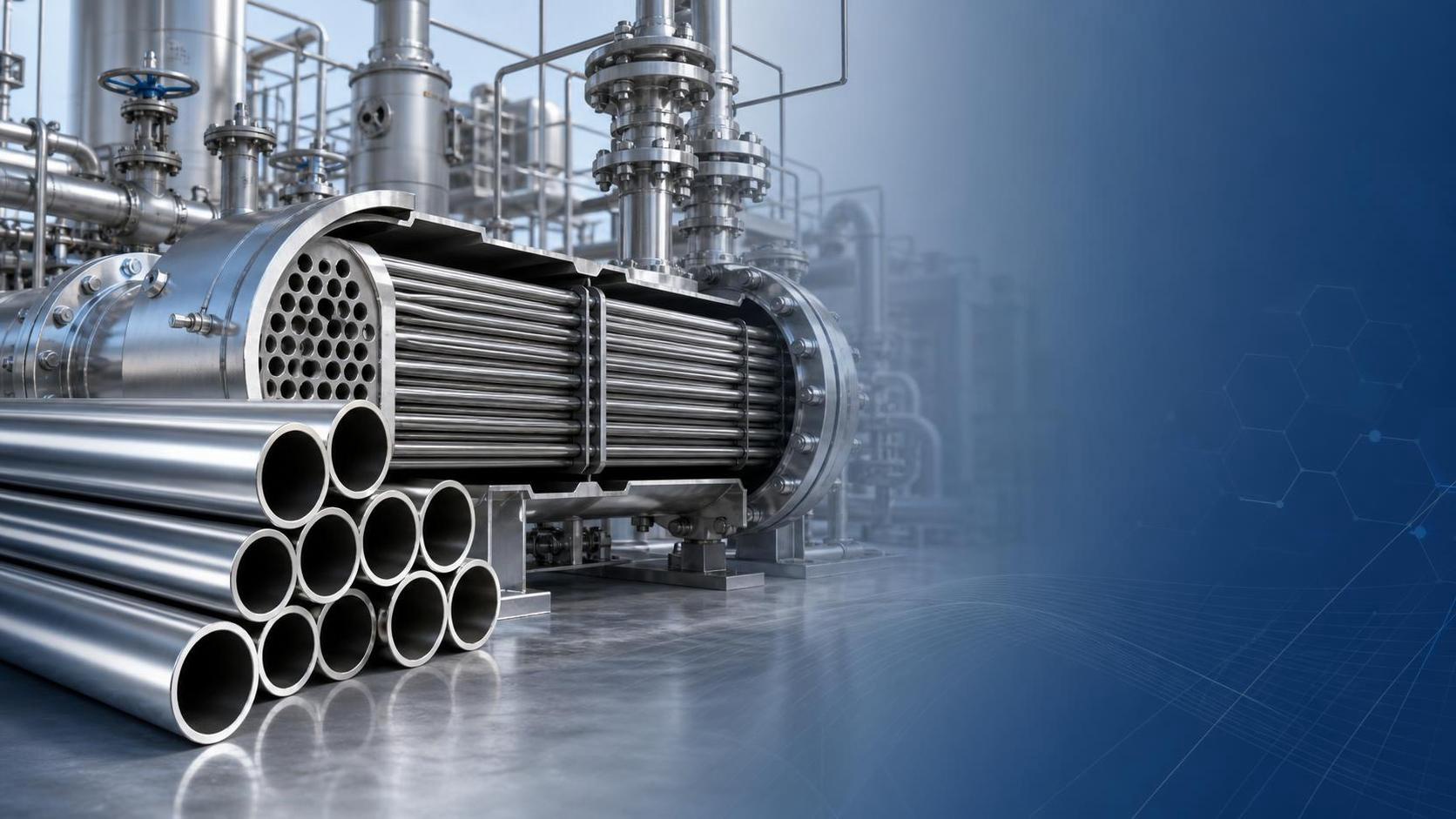
In process equipment, tubing decisions usually become expensive when they are made too late or made from habit. If the exchanger will see a clean, moderate-duty service, many tube options can work. Seamless Stainless Steel Heat Exchanger Tube earns its place when the process is less forgiving: higher pressure, cycling temperatures, tighter leakage tolerance, corrosive media, or a maintenance window that is hard to get back once the plant is running.
For project managers, the practical question is not whether seamless tube is “better” in the abstract. The real question is when its performance margin solves a project risk that would otherwise show up as rework, unplanned shutdown, premature replacement, or a long argument between engineering, procurement, and operations.
A useful rule: if tube failure would force a unit outage, contaminate product, create a safety event, or trigger difficult access work, seamless tube deserves an early review instead of being treated as a commodity line item.
Use seamless tube when pressure and integrity margins are driving the design
One of the clearest cases for seamless tube is a service where pressure containment is not just a design calculation but a project risk. That includes shell-and-tube exchangers in refinery units, chemical processing skids, high-pressure coolers, and systems with frequent startups and shutdowns.
The checkpoint here is simple:
- Look at the design pressure and the upset pressure, not only the normal operating pressure.
- Check whether the exchanger will see thermal cycling, pulsation, or flow instability.
- Review whether the tube side is the process stream where leakage has the highest consequence.
In these situations, seamless tubing is often chosen because the absence of a welded seam removes one variable from the integrity discussion. That does not eliminate the need for proper grade selection, wall thickness, fabrication control, or inspection, but it helps when the project team wants a cleaner path through pressure-related risk review.
A common mistake is to approve seamless tube based on pressure alone while ignoring tube-sheet expansion, vibration, and support conditions. If vibration risk is present, tube integrity is a system issue, not just a material issue.
Choose it earlier when corrosion is uncertain or difficult to monitor
Projects often underestimate the cost of “slightly aggressive” service. Chloride-bearing water, mixed process streams, cleaning chemicals, condensate with contaminants, and intermittent oxygen exposure can turn a seemingly ordinary exchanger into a maintenance problem.
This is where seamless stainless steel heat exchanger tube becomes a strong candidate, especially when corrosion damage would be hard to detect before it affects performance. The key is not to ask, “Is stainless good for corrosion?” That is too broad to be useful. Ask these instead:
- What is actually touching the tube ID and OD during normal operation, shutdown, cleaning, and idle periods?
- Will chlorides, sulfides, acids, or contaminated wash fluids be present, even occasionally?
- Will deposits or stagnant zones make local corrosion more likely than bulk chemistry suggests?
- Is there any chance of cross-contamination that would make a pinhole leak unacceptable?
If your answers raise uncertainty, that is usually the point where material review needs to move beyond a generic stainless assumption and into the actual grade, surface condition, cleaning regime, and water chemistry envelope. Seamless construction helps, but it is not a substitute for getting the metallurgy decision right.
Another field-level reality: corrosion failures often show up after handover, when the original design logic is no longer in the room. If the service is hard to inspect and hard to isolate, build more conservatism into the tube choice from the start.
Pay attention to temperature swings, not only maximum temperature
A lot of tube selections look acceptable on a datasheet because the listed temperature is within range. Trouble starts when that temperature does not stay steady. Batch plants, utility systems with changing demand, heat recovery loops, and equipment that sees repeated sterilization or cleaning cycles all put extra stress on tubing.
Use seamless tube when the exchanger will experience:
- rapid heating and cooling
- frequent startup and shutdown cycles
- combined pressure and thermal shock
- process upsets that temporarily push the unit outside steady-state conditions
What matters here is fatigue exposure over time. A tube that looks economical at purchase can become the expensive option if cycling drives leaks, retubing, or repeated test failures. Project teams that operate in campaign mode or seasonal load changes usually understand this after one bad turnaround. It is better to build it into the first decision.
Use it where cleanliness, product separation, or contamination control matters
Not every exchanger sits in a dirty utility corner. In food processing, pharmaceuticals, specialty chemicals, high-purity water systems, and fine chemical production, tube failure is not only a mechanical issue. It can become a product quality event.
That changes the decision. Seamless stainless tube is often preferred when the exchanger separates fluids that must stay separated for quality, regulatory, or downstream process reasons. If a leak would send cleaning media into product, cooling water into process fluid, or process contaminants into a clean loop, the cost of a conservative tube choice is usually easier to defend than the cost of one contamination incident.
This does not mean every sanitary-looking application needs the same specification. It means the consequences of leakage should be written into the material decision, not discovered after commissioning.
Check whether maintenance access is poor or downtime is expensive
Some exchangers are easy to isolate, inspect, and retube. Others are buried in packaged systems, elevated structures, hazardous areas, or tightly scheduled process trains where every hour of downtime carries a production penalty. In those cases, seamless tube should be considered as a lifecycle decision, not a procurement premium.
A good checklist for the project stage:
This is one of the most practical decision points for project leaders, because it ties tube selection directly to schedule risk and operating continuity.
Do not treat “stainless” as a single answer
A recurring error in RFQs is naming stainless steel heat exchanger tube without locking down the service conditions that drive grade selection. Seamless construction and stainless composition solve different parts of the problem. One addresses manufacturing form; the other addresses corrosion resistance, strength at temperature, and service suitability.
Before freezing the specification, make sure the team has aligned on these points:
- tube-side and shell-side media
- normal, upset, and cleaning temperatures
- chloride exposure and water quality
- required wall thickness and corrosion allowance philosophy
- fabrication method, inspection scope, and documentation package
If these are still vague, the quote comparison will be vague too. That usually leads to a low-price selection followed by technical clarifications that consume more time than the original saving was worth.
Review the fabrication and inspection path before purchase
Even when seamless tube is the right call, projects still go wrong in procurement. Tube performance depends on more than the headline material description. You need to know what standard the tube is being supplied to, what dimensional tolerances matter for your exchanger design, what testing is included, and what traceability the project requires.
For project execution, the practical sequence is:
- Match the service conditions to the required tube form and material grade.
- Confirm the applicable project or customer specification, including any code-driven documentation requirements.
- Check mill test documentation, inspection scope, and any additional nondestructive examination required by the job.
- Verify that bending, expansion, welding, and cleaning steps in fabrication will not undermine the original material choice.
That last point gets missed more often than it should. A solid tube specification can still be weakened by rough handling, poor storage, uncontrolled fabrication practices, or cleaning chemicals that were never reviewed against the selected grade.
The quickest decision filter for project teams
If you need a fast screen before the full material review, use this working filter. Seamless stainless steel heat exchanger tube deserves serious consideration when several of these are true at the same time:
- the exchanger handles aggressive or variable process media
- pressure integrity has little room for error
- thermal cycling is part of normal operation
- leakage would cause contamination, safety exposure, or unit shutdown
- inspection and replacement access will be difficult after startup
- the project is trying to reduce lifecycle interventions, not just purchase cost
If only one of those applies and the duty is otherwise mild, seamless tube may still be justified, but the case is less automatic. If several apply together, delaying the decision usually creates more risk than value.
What to lock down before the order is released
Before procurement closes the package, make sure the team has done three things in order. Define the real service envelope, including upset and cleaning conditions. Translate that into a tube material and form that fit the exchanger duty. Then verify that inspection, documentation, and fabrication controls support that choice all the way to installation.
That sequence keeps the decision grounded in operating reality instead of catalog language. In process equipment, seamless tube is most useful where failure is hard to tolerate and even harder to recover from. When that is the job in front of you, make the call early and specify it with enough discipline that the performance you paid for actually reaches the plant.
Can't find what you're looking for ?
Leave a Message we will call you back quickly!
Product Classification