Why does service life deserve as much attention as price when sourcing stainless steel tubes?
Because the cheaper tube is not always the cheaper purchase.
For a business assessment team, service life affects three cost layers at the same time: how often the tube needs replacement, how much downtime a failure can trigger, and how much maintenance the system absorbs over its operating period. A low initial price can still turn into a poor buying decision if the material starts pitting, scaling, cracking, or losing wall thickness earlier than expected in the real operating environment.
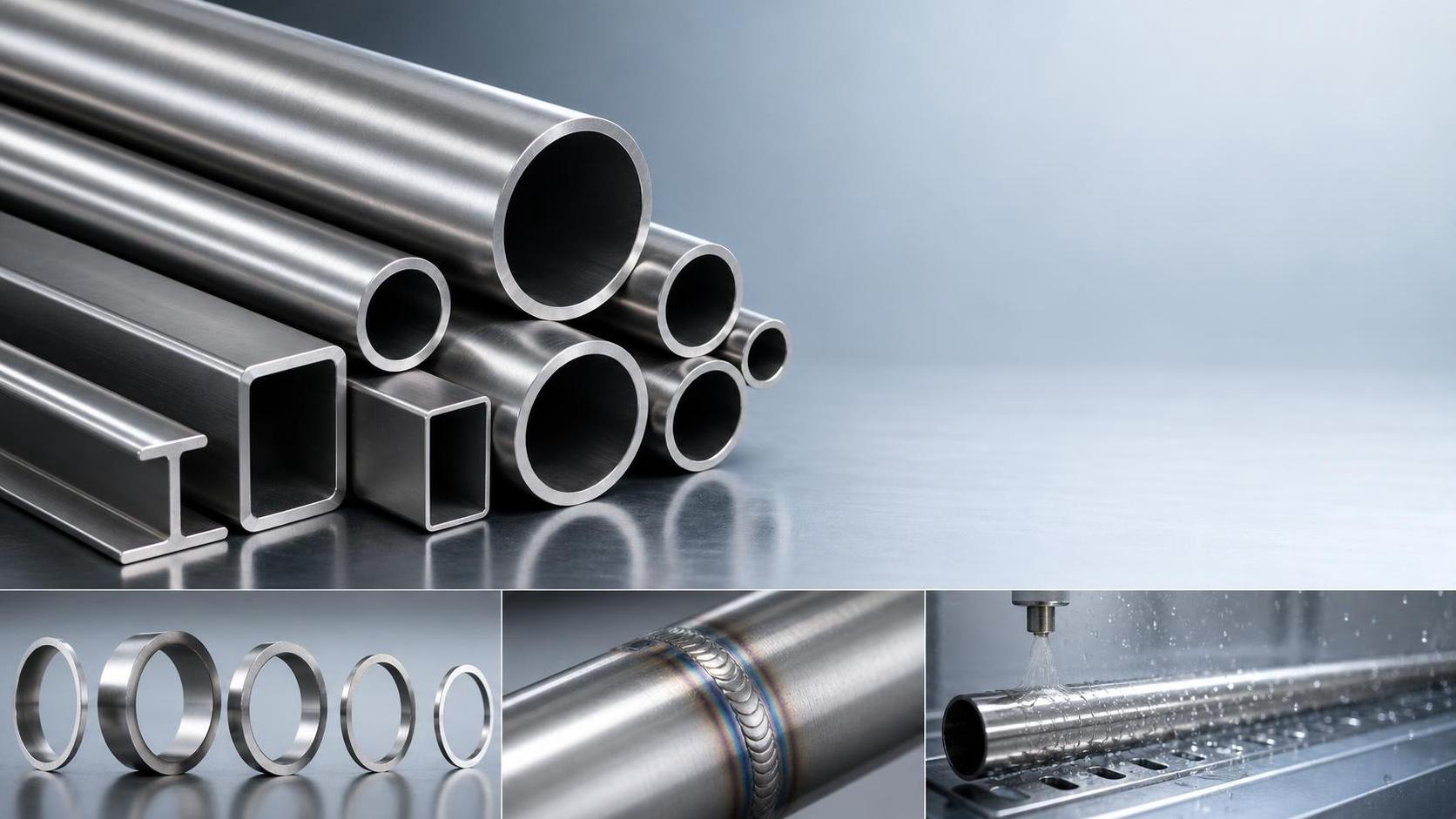
That is why Stainless Steel Tubes should be evaluated as a life-cycle asset, not a line item bought on unit price alone. The right question is not “Which quote is lowest?” but “Which option is most likely to stay stable in our temperature, pressure, media, cleaning routine, and installation conditions?”
Which factor shortens service life fastest?
In most practical buying situations, corrosion mismatch is the fastest route to early failure.
A tube may look fine on paper and still fail early if the grade does not match the actual fluid, chloride exposure, humidity, cleaning chemicals, or temperature range. This happens often when procurement reviews only mechanical dimensions and leaves process conditions to later stages. By then, the material has already been selected on the wrong basis.
A few common examples:
- Austenitic stainless can perform well in many general environments, but chloride-rich conditions may drive pitting or crevice corrosion.
- Frequent chemical cleaning can be more aggressive than the process fluid itself.
- Outdoor or coastal exposure can change the corrosion picture even when the internal media is relatively mild.
If you want to predict service life with any confidence, start with the corrosion environment, not the catalog description.
Is grade selection mainly about 304 versus 316?
Not really. That is often where the discussion begins, but it should not end there.
Many buyers reduce the conversation to a simple grade comparison, usually because they are trying to balance corrosion resistance against price. The problem is that service life depends on a combination of grade, wall thickness, manufacturing quality, finish condition, weld quality, and operating stress. A better grade can extend life, but only if the rest of the supply actually supports that performance.
When comparing offers, ask for the exact material designation and compare it against the application conditions you already know. Then check whether the supplier documentation clearly identifies the product form, heat or lot traceability, and inspection information. If those details are vague, the grade label alone does not tell you enough about expected durability.
What operating conditions should procurement teams collect before asking for quotes?
This step is often skipped, and it is where service-life estimates go wrong.
Before requesting Stainless Steel Tubes, gather the conditions that directly affect durability:
- Internal media: water, steam, gas, chemical solution, slurry, or mixed service
- Temperature range, including cleaning or shutdown conditions
- Operating pressure and any pressure cycling
- External environment: indoor, outdoor, marine, high humidity, chemical splash
- Flow characteristics: high velocity, solids, vibration, erosion risk
- Joining method: welded, threaded, bent, flared, or mechanically fitted
- Cleaning and maintenance routine
These are not engineering extras. They are procurement inputs. Without them, suppliers will price against assumptions, and assumptions are where hidden replacement cost starts.
Do wall thickness and dimensional tolerance really affect service life, or just fit-up?
They affect both.
Wall thickness is part of the tube’s corrosion allowance, pressure capacity, and mechanical stability. If the actual wall comes in near the lower end of tolerance, the tube may still be compliant for supply, but it can offer less margin against wear, vibration, erosion, or future wall loss in service.
That matters in long-term cost reviews. Two offers that look similar by nominal size may carry different durability margins if one supplier holds tighter dimensional control and the other ships closer to minimum tolerance. Procurement teams should compare nominal dimensions and the tolerance standard being used, not just the headline OD and wall figure.
How much does manufacturing route matter: seamless versus welded?
It matters when the service conditions make the weld area a durability issue.
A welded tube is not automatically a weak choice, and a seamless tube is not automatically the longer-life choice. The real question is whether the manufacturing route suits the pressure, corrosion profile, fabrication method, and inspection requirement of the application. In some services, welded tube performs well for a long period. In others, buyers want extra confidence around pressure cycling, aggressive media, or downstream fabrication, and that changes the decision.
This is where procurement should stop treating product type as a pricing category and start treating it as a risk category. If the tube will be bent, expanded, repeatedly cleaned, or used in environments where localized corrosion is a concern, the production route deserves a closer look in the technical review.
Can surface finish change the expected life of stainless steel tubes?
Yes, more than many non-technical buyers expect.
Rougher or damaged surfaces can trap contaminants, hold moisture, and create initiation points for corrosion. A smoother, cleaner surface is usually easier to maintain and less likely to support localized attack. Surface condition also matters when hygiene, cleanability, or appearance retention is part of the use case.
This does not mean every purchase needs a premium finish. It means the finish should match the service. If the tube will be exposed to demanding cleaning cycles or contamination-sensitive duty, surface quality is part of service life, not a cosmetic detail.
Which supplier documents are most useful for estimating durability before purchase?
The most useful documents are the ones that let you verify what is actually being supplied, not just what was promised in a quote.
Focus on documents that identify material, dimensions, inspection, and traceability. A practical review usually includes:
A quote with very little supporting documentation is harder to benchmark for long-term value, even if the price is attractive.
What are the most expensive mistakes buyers make when comparing quotes?
The expensive mistakes are usually quiet ones. The quote looks comparable, the PO gets issued, and the cost shows up later in maintenance or unplanned replacement.
- Comparing by grade name only, while ignoring manufacturing route, finish, and tolerance.
- Assuming the process fluid is the only corrosion driver and forgetting external exposure or cleaning chemicals.
- Buying to nominal wall without checking the tolerance basis.
- Treating documentation as paperwork instead of part of risk control.
- Using a previous project specification without checking whether operating conditions are still the same.
In purchasing reviews, “same size, same grade” is often a false comparison. That shortcut is where many avoidable service-life problems begin.
When does a higher tube price make financial sense?
A higher purchase price makes sense when failure cost is large and predictable enough to evaluate.
That includes systems where shutdown is costly, access for replacement is difficult, contamination risk is serious, or maintenance labor is expensive. In those situations, the premium for better material fit, tighter control, or stronger documentation can be modest compared with one early replacement event.
A practical procurement view is to compare not only price per meter, but expected cost over the intended service window. If one option reduces intervention frequency, field labor, production interruption, and procurement repetition, it may be the lower-cost choice even before the first replacement cycle is reached.
How should a business evaluator make the final buying call?
Use a short decision sequence.
- Define the actual service conditions, including internal and external exposure.
- Check whether the quoted Stainless Steel Tubes match those conditions in grade, wall, finish, and manufacturing route.
- Review supporting documents for traceability and inspection scope.
- Estimate the cost of failure, replacement, and downtime, not just the purchase value.
- Choose the offer that gives the most reliable operating life for the intended service window.
If one principle is worth keeping in front of the team, it is this: buy the tube for the environment it will actually face, not the one assumed in a fast comparison sheet. That single shift usually leads to better service life, fewer surprises, and a cleaner cost picture over time.
Can't find what you're looking for ?
Leave a Message we will call you back quickly!
Product Classification