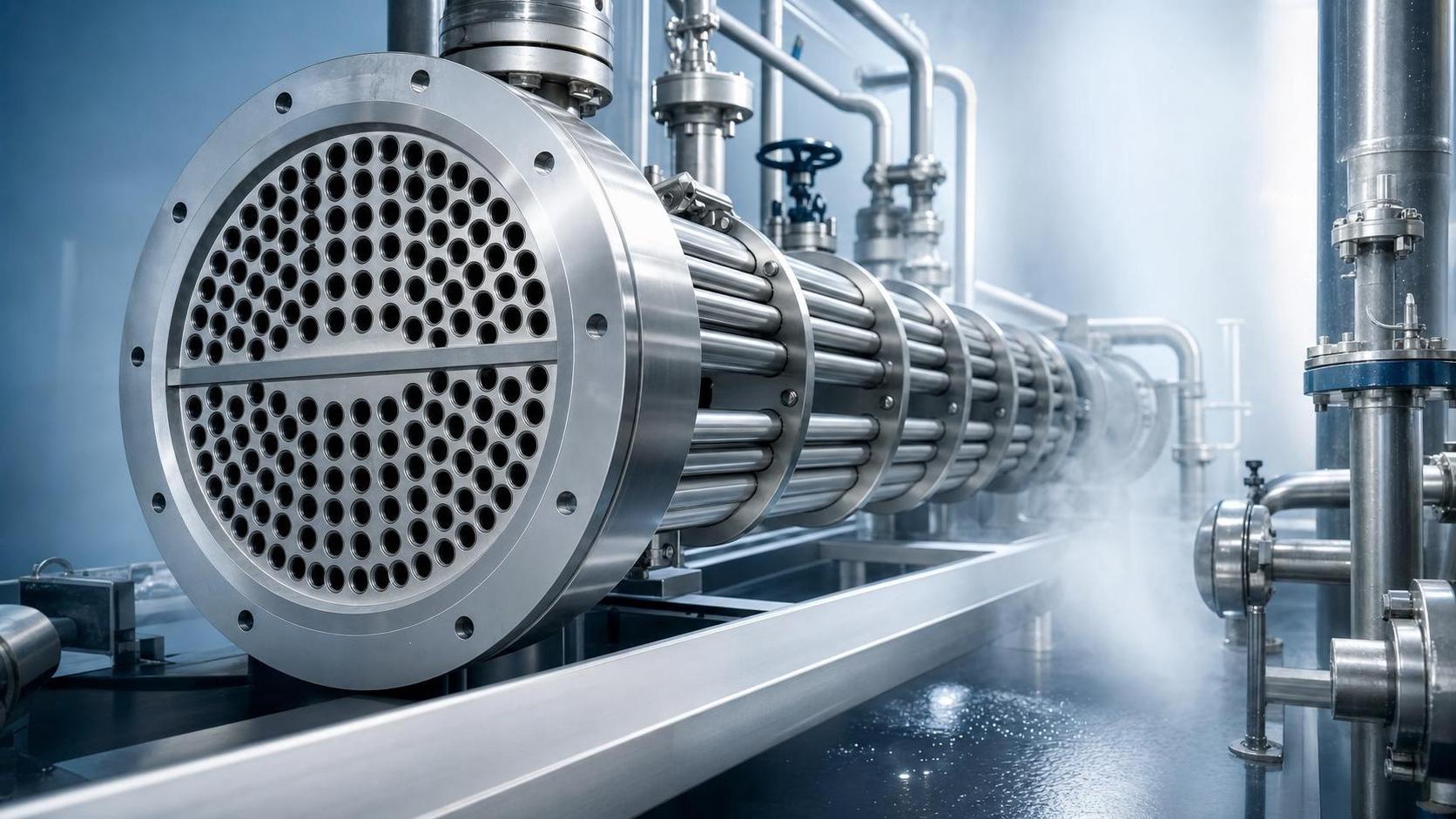
A Stainless Steel Condenser Tube sits at the center of many heat exchange systems, even when it is rarely noticed from the outside.
It carries cooling or process media, transfers heat efficiently, and keeps equipment operating under pressure, moisture, and chemical exposure.
That combination matters in steel-related supply chains because material choice directly affects service life, maintenance intervals, and thermal performance.
When condensers work in seawater, industrial water, or aggressive process conditions, tube material stops being a detail and becomes a decision point.
Understanding the role of a Stainless Steel Condenser Tube
A condenser tube is a metal tube used inside a condenser or similar heat exchanger.
Its job is to allow heat to move from one fluid to another without mixing the two media.
In many systems, vapor releases heat and turns back into liquid on or around the tube surface.
When that tube is made from stainless steel, it gains better resistance to corrosion, scaling, and mechanical wear than many standard carbon steel options.
Simple geometry does not mean simple performance.
Tube diameter, wall thickness, surface condition, alloy grade, and manufacturing quality all influence heat transfer and reliability.
From a steel and sections perspective, the Stainless Steel Condenser Tube belongs to a precision product category where metallurgy and dimensional control matter as much as shape.
Why stainless steel is widely preferred
The main reason is durability in difficult environments.
Condensers often handle moisture, chlorides, changing temperatures, and continuous flow. Those conditions can shorten the life of less resistant materials.
A Stainless Steel Condenser Tube helps reduce that risk because stainless steel forms a passive oxide layer that protects the surface.
That protection is not absolute, but it is one reason stainless grades perform well in long-cycle equipment.
Another benefit is strength across a broad temperature range.
In real operation, tubes face pressure, vibration, cleaning procedures, and occasional thermal shocks. Stainless steel generally handles those demands with stable mechanical properties.
Maintenance also enters the discussion.
If tube failure leads to shutdown, contamination, or a drop in efficiency, the cost of replacement can exceed the original material savings.
That is why stainless steel is often chosen for total lifecycle value rather than only for purchase price.
How a condenser tube works in practice
Heat moves through the tube wall.
One side carries cooling water or another fluid. The opposite side holds vapor or hot process media that must release heat.
As heat passes across the metal, the hotter medium cools and often condenses.
Efficiency depends on more than the alloy itself.
Tube arrangement, flow velocity, fouling tendency, and fluid cleanliness all affect the real heat transfer rate.
Even a high-quality Stainless Steel Condenser Tube can underperform if the system encourages scale, sediment, or stagnant zones.
This is why selection should connect material data with operating conditions, not just catalog descriptions.
Common material grades
Different grades answer different service conditions.
- 304 stainless steel is common in cleaner, less aggressive environments.
- 316 and 316L offer improved corrosion resistance, especially where chlorides are present.
- Duplex stainless grades are considered when higher strength and stronger chloride resistance are needed.
- Special alloys may be used in severe chemical or marine duty.
The right choice depends on water quality, process chemistry, temperature, and cleaning methods.
Where Stainless Steel Condenser Tube is most often used
Usage spans several industries, but the pattern is consistent.
Where corrosion, uptime, and thermal efficiency matter, stainless steel tubes become a practical option.
In power plants, condenser tube integrity influences both output and maintenance planning.
In chemical plants, the material must tolerate not only moisture but also specific process compounds.
In marine service, salt exposure makes corrosion resistance a primary filter before price is even discussed.
What the market is paying attention to
Current interest is not limited to basic corrosion resistance.
Buyers and specifiers are looking more closely at lifecycle cost, energy efficiency, and traceable quality.
A Stainless Steel Condenser Tube that lasts longer can reduce unplanned stoppages and preserve heat exchange efficiency over time.
There is also more attention on fabrication quality.
Tube straightness, weld quality for welded products, eddy current testing, surface finish, and dimensional tolerance are no longer secondary details.
They affect installation fit, flow behavior, and inspection confidence.
From a steel products standpoint, this shifts the conversation from generic tubing to application-matched tubing.
How to evaluate a tube for real service conditions
The most useful approach is to compare service conditions against material limits.
That sounds obvious, but many selection mistakes begin with incomplete operating data.
Key points to check
- Fluid composition, especially chloride content and contamination risk
- Operating and cleaning temperatures
- Pressure range and possible pressure spikes
- Required tube size, wall thickness, and tolerance control
- Expected fouling behavior and maintenance method
- Applicable standards, inspection records, and traceability
It is also worth checking whether seamless or welded tube is more appropriate.
Both can perform well, but the decision depends on design pressure, inspection expectations, and budget range.
In practical sourcing, a lower-price Stainless Steel Condenser Tube may become expensive if it requires earlier replacement or tighter cleaning control.
Typical problems and what they usually indicate
Not every failure comes from poor material.
Many issues point to a mismatch between alloy choice and operating reality.
- Pitting may suggest chloride levels exceeded the selected grade’s resistance.
- Rapid fouling may indicate water quality or flow velocity problems.
- Tube vibration damage can signal design or support issues inside the exchanger.
- Leakage near joints may relate to installation practices rather than the tube body alone.
Looking at failure mode early helps narrow the next decision, whether that means changing grade, adjusting maintenance, or reviewing system design.
A practical way to move from research to selection
A good starting point is to define the operating medium, temperature range, and expected maintenance interval.
Then compare candidate grades, tube specifications, and inspection requirements against those conditions.
For any Stainless Steel Condenser Tube, the useful question is not only whether it can work, but how long it can work without causing efficiency loss or service interruption.
That frame makes material evaluation more grounded.
If the application involves seawater, chemical exposure, or strict hygiene standards, the screening process should become even more specific.
Reviewing standards, requesting test documentation, and matching tube grade to actual fluid conditions is usually the most reliable next step.
That is where a Stainless Steel Condenser Tube changes from a generic steel product into a clearly defined component with measurable performance value.
Can't find what you're looking for ?
Leave a Message we will call you back quickly!
Product Classification