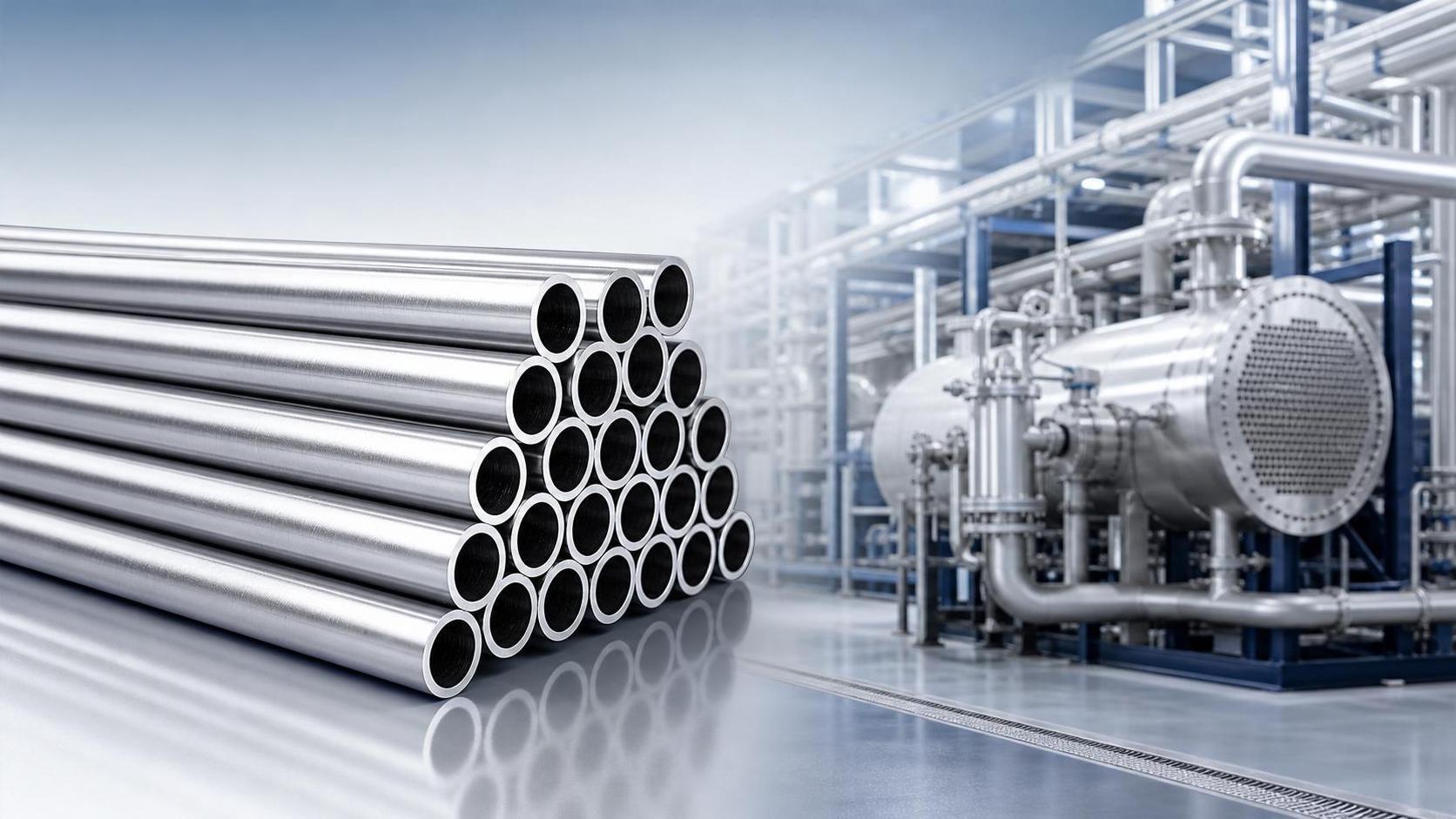
As 2026 comes into view, the market for Stainless Steel Condenser Tube is becoming a more strategic topic across power generation, HVAC, desalination, marine systems, and process industries.
Supply is no longer judged only by mill capacity. Pricing now reflects nickel and molybdenum volatility, trade policy shifts, freight conditions, lead-time pressure, and tighter quality expectations.
That makes 2026 planning less about finding the lowest quote and more about understanding how material grade, tube specification, and sourcing geography affect cost, delivery confidence, and project exposure.
Why the 2026 outlook matters
A Stainless Steel Condenser Tube sits in equipment where heat transfer, corrosion resistance, and long service life all matter at the same time.
In practical terms, tube failure can interrupt production, reduce thermal efficiency, raise maintenance costs, and trigger unplanned replacement cycles.
This is why market conditions deserve attention. Even a modest shift in alloy input costs or delivery windows can alter total installed cost far beyond the tube price itself.
The steel and section market is also moving through uneven demand patterns. Some sectors remain cautious, while energy transition projects and infrastructure upgrades are still supporting stainless demand.
What defines this product in commercial terms
Not every condenser tube carries the same pricing logic. Commercial value depends on grade, size tolerance, surface finish, testing scope, and service environment.
Common material choices include 304, 304L, 316, 316L, duplex grades, and in some cases higher-alloy stainless options for aggressive media.
A Stainless Steel Condenser Tube for clean water service is priced differently from one intended for chloride-rich cooling water, offshore duty, or chemically active process streams.
Buyers are not only purchasing metal. They are purchasing dimensional stability, weld integrity, corrosion margin, traceability, and predictable behavior in a specific operating window.
Key specification points that influence value
- Outside diameter and wall thickness tolerance
- Annealed condition and surface cleanliness
- Eddy current, hydrostatic, or additional NDT requirements
- Straight length consistency and tube sheet compatibility
- Documentation, heat number traceability, and standard compliance
Supply conditions shaping the market
The 2026 supply picture is likely to remain workable, but not frictionless. Capacity exists, yet availability will vary by grade, tube dimension, and region.
Standard grades should stay more accessible than specialty stainless products. The tighter area may be custom dimensions and higher-performance tubes requiring additional inspection or niche alloy content.
Raw material procurement remains a central issue. Nickel and molybdenum costs still feed directly into stainless pricing, especially for 316 and related grades.
Energy costs also matter. Tube production depends on melting, forming, annealing, and finishing steps that are sensitive to electricity and fuel pricing.
Another factor is trade structure. Anti-dumping measures, origin restrictions, and certification requirements can narrow supplier options even when global production looks sufficient on paper.
Where procurement friction may appear
Friction often shows up in places that are easy to overlook during early budgeting. Mill lead times may be acceptable, while finishing, testing, packing, or export documentation adds delay.
That matters for project sequencing. A Stainless Steel Condenser Tube arriving late can affect fabrication schedules, pressure testing plans, and commissioning windows.
Pricing trends to watch in 2026
Most signs point to a market that remains price-sensitive rather than structurally overheated. Still, that does not mean pricing will be flat.
Base stainless prices may stay relatively manageable in periods of softer industrial activity. Surcharges and conversion costs, however, can create sudden movement in delivered tube prices.
For many buyers, the real issue is not a headline increase. It is the spread between a budgetary quote and the final landed cost after alloy adjustments, packaging, freight, duties, and testing extras.
This is why comparing tube offers line by line matters more than comparing headline numbers. The cheapest option can become expensive once nonconformance risk enters the picture.
Applications that will keep demand stable
Demand for Stainless Steel Condenser Tube is supported by several durable application groups rather than one single market.
Power and utility projects continue to require dependable heat exchange components, particularly where water chemistry or maintenance cycles challenge lower-cost materials.
HVAC systems also remain relevant, especially in commercial and institutional retrofits where efficiency upgrades need long-life tubing with stable corrosion performance.
Industrial processing adds another layer of demand. Chemical plants, refineries, food facilities, and desalination systems often need condenser and heat exchanger tubing matched to controlled hygiene or corrosion conditions.
How application changes the buying decision
- Closed-loop clean service may allow broader grade options
- Salt-bearing or chloride-rich environments push selection toward stronger corrosion resistance
- High downtime costs justify stricter testing and documentation
- Retrofit projects often need closer dimensional matching than new installations
What to examine before locking in supply
A sound sourcing decision starts with the service condition, not the catalog page. Grade selection should reflect water quality, temperature range, pressure, scaling tendency, and cleaning practice.
It is also worth checking whether a quoted Stainless Steel Condenser Tube includes the same inspection scope across all offers. This is a common source of false price comparisons.
Documentation matters as much as metal chemistry in many projects. Certificates, test records, and origin details influence acceptance, warranty confidence, and cross-border movement.
Practical review points
- Confirm the exact operating medium and chloride exposure level
- Match standards and testing requirements to project specifications
- Review mill origin, finishing route, and delivery history
- Separate ex-works, landed, and installed cost assumptions
- Build contingency for longer lead times on nonstandard sizes
A workable strategy for 2026
The market outlook does not suggest panic buying, but it does favor earlier qualification and clearer technical alignment.
For many organizations, the best approach is to identify which Stainless Steel Condenser Tube items are routine and which are high-consequence components needing tighter control.
Routine items may be managed through broader supplier competition. Critical tubes deserve deeper review of alloy risk, certification scope, and delivery reliability before budgets are finalized.
It also helps to revisit stocking assumptions. In a market with moderate volatility, selective safety stock can protect turnaround schedules without tying up excessive capital.
The more disciplined path into 2026 is straightforward: clarify service conditions, compare offers on equal technical terms, track alloy-linked price exposure, and verify supply resilience before placing large-volume commitments.
That kind of preparation turns the Stainless Steel Condenser Tube market from a pricing uncertainty into a manageable procurement decision.
Can't find what you're looking for ?
Leave a Message we will call you back quickly!
Product Classification