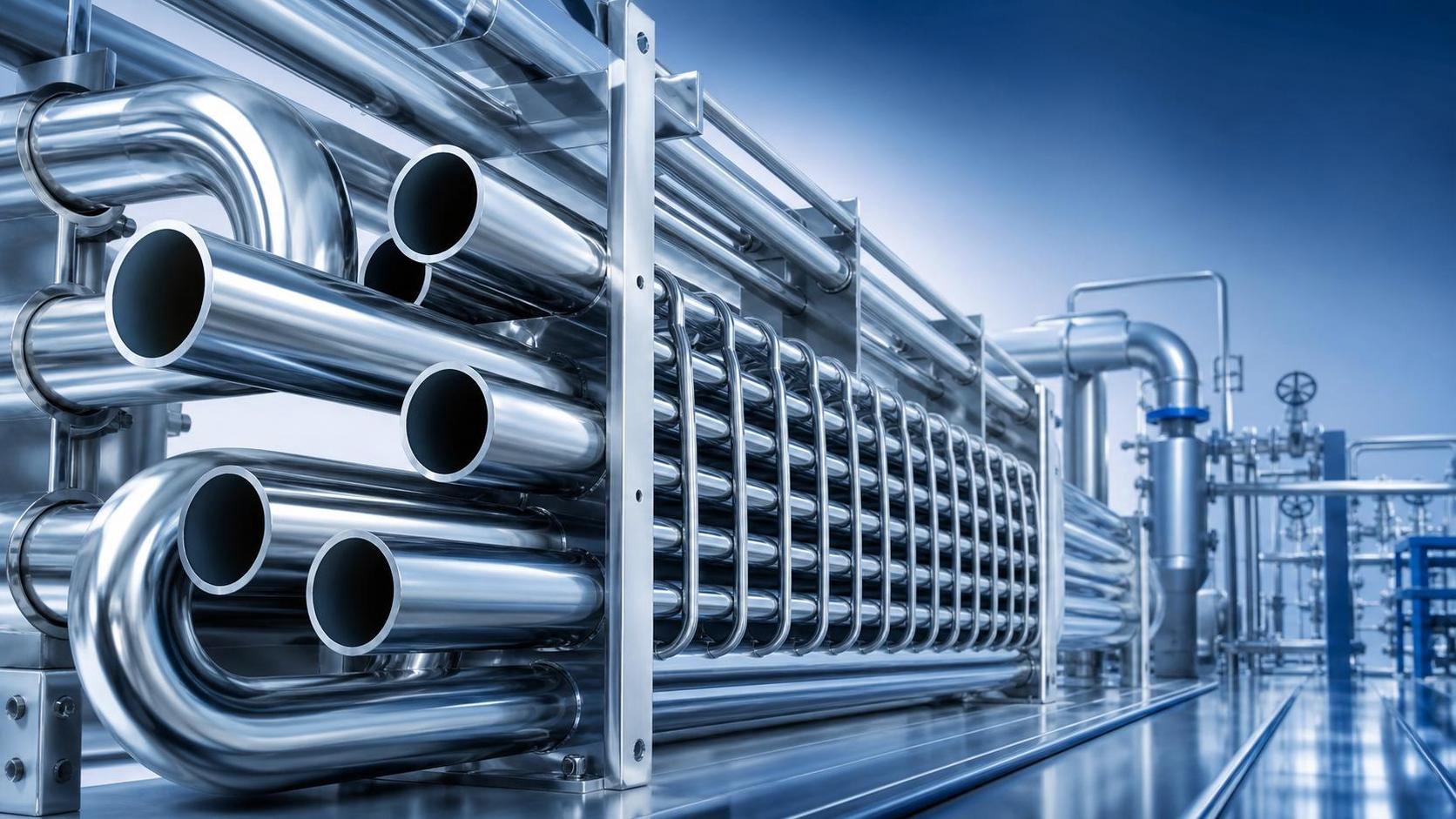
How to Choose Stainless Steel Condenser Tube for Long Service Life
Choosing the right Stainless Steel Condenser Tube is critical for quality control and plant safety, especially in demanding heat-exchange systems.
The right material, dimensions, and corrosion resistance can extend service life, reduce failure risks, and support stable operation.
This guide explains the key selection factors behind reliable, long-term decisions in condenser applications.
Why Stainless Steel Condenser Tube Selection Matters
A condenser tube works under constant thermal cycling, fluid exposure, and pressure variation.
That means a weak material choice rarely fails all at once.
More often, the problem starts with pitting, scaling, thinning, or stress corrosion cracking.
In real operations, those small defects become leaks, contamination events, and unplanned shutdowns.
A well-chosen Stainless Steel Condenser Tube helps control all three risk areas: corrosion, pressure integrity, and maintainability.
That is why selection should never rely on price alone.
Start With the Service Environment
The first decision point is always the operating environment.
Before comparing grades, define what the tube will actually face every day.
- Cooling medium: fresh water, brackish water, seawater, steam, or process fluid
- Operating temperature and peak temperature excursions
- Working pressure and pressure fluctuation frequency
- Chloride content, pH, oxygen level, and scaling tendency
- Cleaning method, shutdown intervals, and chemical treatment history
This step sounds basic, but it often separates durable systems from repeat failures.
For example, a Stainless Steel Condenser Tube that performs well in clean freshwater may struggle in chloride-rich cooling circuits.
From a safety view, incomplete media data creates hidden risk because the corrosion mechanism stays undefined.
Choose the Right Stainless Steel Grade
Grade selection is the core of long service life.
Different stainless steels respond very differently to chlorides, heat, and mechanical stress.
Common grade choices
- 304/304L: suitable for mild service with low chloride exposure
- 316/316L: better pitting resistance in moderate chloride environments
- Duplex stainless steel: stronger and more resistant to chloride stress cracking
- Super austenitic or super duplex grades: preferred for severe marine or aggressive process conditions
If the condenser faces frequent chloride exposure, 304 is usually too optimistic.
A better choice may be 316L or a duplex Stainless Steel Condenser Tube, depending on temperature and water chemistry.
The practical rule is simple: match the grade to the corrosion mechanism, not to habit.
What to verify on the material side
- Chemical composition certificate
- Relevant ASTM, ASME, or EN standard compliance
- Heat treatment condition
- PMI or third-party verification when required
This is also where broader material planning can help.
In some facilities, corrosion control decisions are coordinated across tube systems, supports, and cladding.
For related external protection needs, some teams also review options like DX52D+Z Galvanized Steel Plate during maintenance planning.
Pay Attention to Tube Dimensions and Wall Thickness
Grade alone does not guarantee long life.
Tube size directly affects heat transfer, erosion rate, and pressure resistance.
A thinner wall may improve thermal performance on paper, but it reduces corrosion allowance.
An oversized wall may increase cost and reduce efficiency without solving the real failure mode.
Key dimension checks
- Outside diameter and tolerance
- Wall thickness and uniformity
- Tube length and straightness
- Expansion compatibility with tube sheet design
- Internal surface quality affecting fouling tendency
For a Stainless Steel Condenser Tube, dimensional consistency matters as much as nominal size.
Large tolerance variation can create weak joints, uneven flow, and local vibration.
Over time, those issues shorten service life even when the alloy itself is correct.
Check Corrosion Resistance Beyond the Datasheet
Datasheets are useful, but real performance depends on actual exposure.
The main question is not whether the tube is stainless.
The main question is whether that Stainless Steel Condenser Tube resists the specific corrosion mode present in your system.
Typical corrosion risks
- Pitting corrosion in chloride-bearing water
- Crevice corrosion under deposits or at joints
- Stress corrosion cracking under heat and tensile stress
- Erosion-corrosion in high-velocity zones
- Microbiologically influenced corrosion in poorly controlled circuits
A common mistake is choosing material only by PREN reputation or market familiarity.
That helps, but it does not replace field-specific evaluation.
If recent failures occurred, review failed tube samples, deposits, and water treatment records before buying again.
Look at Manufacturing Quality and Inspection Records
Long service life depends on how the tube was made, not only what it was made from.
Poor forming, inconsistent annealing, or weak weld quality can undermine a good specification.
Important inspection points
- Eddy current or hydrostatic test reports
- Surface finish and cleanliness records
- Weld integrity for welded tube products
- Mechanical property test results
- Traceability from heat number to delivery batch
For critical equipment, traceability is not paperwork for its own sake.
It is the fastest path to root-cause analysis when a failure appears.
A high-quality Stainless Steel Condenser Tube should arrive with complete and verifiable documentation.
Do Not Ignore Installation and Maintenance Compatibility
Selection should also reflect how the tube will be installed and maintained.
Even the best Stainless Steel Condenser Tube can fail early if expansion, cleaning, or shutdown practice is poorly matched.
Ask these practical questions
- Will the tube tolerate the planned chemical cleaning method?
- Is the grade compatible with the tube sheet and connected metals?
- Can the surface finish limit deposit attachment?
- Will velocity control reduce erosion at inlets and bends?
- Is spare stock management aligned with batch traceability?
These questions matter because service life is a system outcome, not a catalog promise.
More clearly seen in practice, the wrong cleaning chemistry can damage passive films and accelerate attack.
A Simple Evaluation Framework for Decision Making
When several options look similar, use a structured comparison.
This kind of review prevents short-term purchasing logic from dominating a long-term reliability decision.
That also applies when teams compare nearby material solutions, including support components such as DX52D+Z Galvanized Steel Plate in wider equipment upkeep planning.
Final Selection Priorities
To choose a Stainless Steel Condenser Tube for long service life, keep the priorities in order.
- Define the true service environment.
- Match the grade to the expected corrosion mechanism.
- Verify dimensions, wall tolerance, and installation fit.
- Require inspection records and material traceability.
- Consider maintenance practice and lifecycle cost together.
A reliable decision usually comes from combining field data, standards review, and supplier quality evidence.
When those pieces align, the selected Stainless Steel Condenser Tube is far more likely to deliver stable, safe, and cost-effective service over time.
Can't find what you're looking for ?
Leave a Message we will call you back quickly!
Product Classification