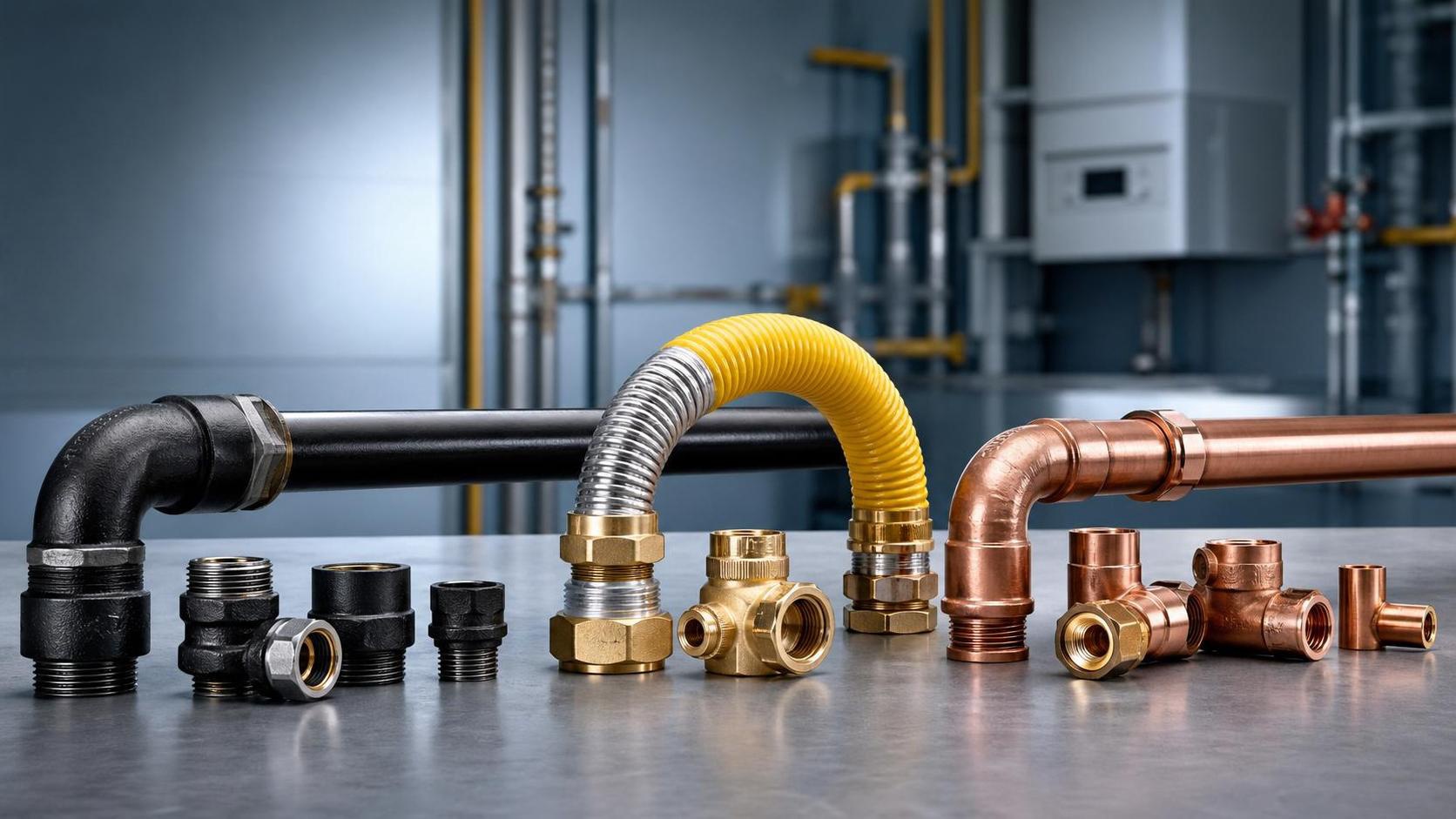
Gas Pipe Material Comparison: Steel vs CSST vs Copper
Choosing the right gas pipe material affects safety, labor cost, and service life.
That is why a careful gas pipe comparison matters before any residential or commercial installation begins.
Steel, CSST, and copper each solve different problems.
They differ in strength, flexibility, code acceptance, corrosion behavior, and installation speed.
This guide explains how each gas pipe option performs in real applications.
It also highlights where each material fits best, and where it may create avoidable risk.
What matters most when choosing a gas pipe
Most decisions come down to five factors.
- Local code approval and fuel type compatibility
- Installation complexity and labor time
- Mechanical strength and puncture resistance
- Corrosion resistance and environmental exposure
- Long-term maintenance and expansion needs
A gas pipe that looks cheaper on paper may cost more after fittings, protection, and inspection requirements.
So the best material is rarely universal. It depends on the building, route, and local code environment.
Steel gas pipe: the traditional heavy-duty option
Steel has been a standard gas pipe material for decades.
Black steel pipe is especially common for interior gas distribution.
Its main advantage is strength.
It handles exposed runs, mechanical abuse, and demanding commercial conditions better than lighter systems.
Where steel performs well
- Basements, utility rooms, and plant areas
- Commercial kitchens and industrial spaces
- Exposed piping that needs impact resistance
- Projects where code officials prefer established methods
Main drawbacks
Steel gas pipe is labor intensive.
Cutting, threading, and joining take more time than flexible alternatives.
That usually increases installation cost, especially on longer or more complex routes.
Steel can also corrode if moisture control is poor.
For outdoor or damp environments, protective coatings and proper support become more important.
CSST gas pipe: faster routing, higher installation efficiency
CSST stands for corrugated stainless steel tubing.
It is a flexible gas pipe designed to reduce fittings and speed up installation.
In remodeling work, that flexibility can be a major advantage.
Installers can route the gas pipe through framing cavities with fewer joints.
Why CSST is popular
- Faster installation in tight building layouts
- Fewer threaded joints compared with steel
- Lighter handling and easier transport on site
- Good fit for residential branch lines
What to watch closely
CSST is not simply a drop-in replacement for every steel gas pipe system.
Bonding and grounding rules matter a lot.
Manufacturers also specify protective measures against puncture and electrical damage.
Local codes may vary by brand, jacket type, and installation method.
That means the best CSST result depends heavily on installer training and exact code compliance.
Copper gas pipe: useful in some places, restricted in others
Copper is familiar in plumbing, but its use as a gas pipe is more limited.
Some jurisdictions allow it for specific gases or building types.
Others restrict it because certain gas compositions can react with copper over time.
Potential benefits
- Lightweight and easy to handle
- Neat appearance for visible interior runs
- Strong corrosion resistance in suitable environments
Limitations that affect selection
Copper gas pipe is more vulnerable to damage than steel.
It also raises more code questions during early project planning.
For natural gas systems, approval often depends on sulfur content and regional practice.
So copper may work well in some applications, but it is rarely the first default choice.
Side-by-side gas pipe comparison
From a selection standpoint, steel wins on ruggedness, CSST wins on speed, and copper only fits narrower approved situations.
Residential vs commercial gas pipe selection
Residential projects often value routing efficiency and reduced labor time.
That is one reason CSST is common in modern house layouts.
Still, exposed appliance connections and meter areas may use steel gas pipe for added durability.
Commercial projects usually face stricter durability expectations.
Equipment rooms, service corridors, and kitchens often favor steel because it tolerates harder use.
In mixed systems, designers may combine materials where code permits and where each section benefits most.
Cost is more than material price
A common mistake is comparing only pipe cost per foot.
Real gas pipe cost includes fittings, support hardware, installer skill, routing time, and inspection corrections.
Steel may cost less in raw material than expected, yet labor can push the final total much higher.
CSST may look premium at first, but reduced labor can offset that difference.
Copper pricing can also swing with the metals market, making budgeting less predictable.
Related steel product context
In broader steel supply chains, protective performance often matters as much as base strength.
That is also why galvanized steel products remain important across support, fastening, and fabricated system components.
For reference, SGC340/400/440/490/570 Galvanized Steel Wire reflects the kind of coated steel solution often considered where corrosion resistance and stable mechanical properties are required.
While it is not a direct gas pipe substitute, it shows how material protection remains a practical selection theme across steel applications.
Practical checklist before choosing a gas pipe
- Confirm the local fuel gas code and inspector preferences.
- Check whether the route is concealed, exposed, or outdoors.
- Estimate labor, not just material price.
- Review bonding, grounding, and protection rules for CSST.
- Verify copper approval before design work goes too far.
- Match the gas pipe material to future maintenance access.
This short process prevents many expensive changes later.
It also helps balance safety, cost control, and long-term reliability in a more realistic way.
Final take on steel vs CSST vs copper
If durability and proven acceptance matter most, steel gas pipe usually leads.
If routing speed and installation efficiency are the priority, CSST is often the stronger option.
If copper is under consideration, code approval should come first, not last.
The right gas pipe choice is the one that fits the application, complies with local requirements, and reduces avoidable risk over time.
Start with the route, the code, and the service conditions, then compare materials against those facts.
Can't find what you're looking for ?
Leave a Message we will call you back quickly!
Product Classification