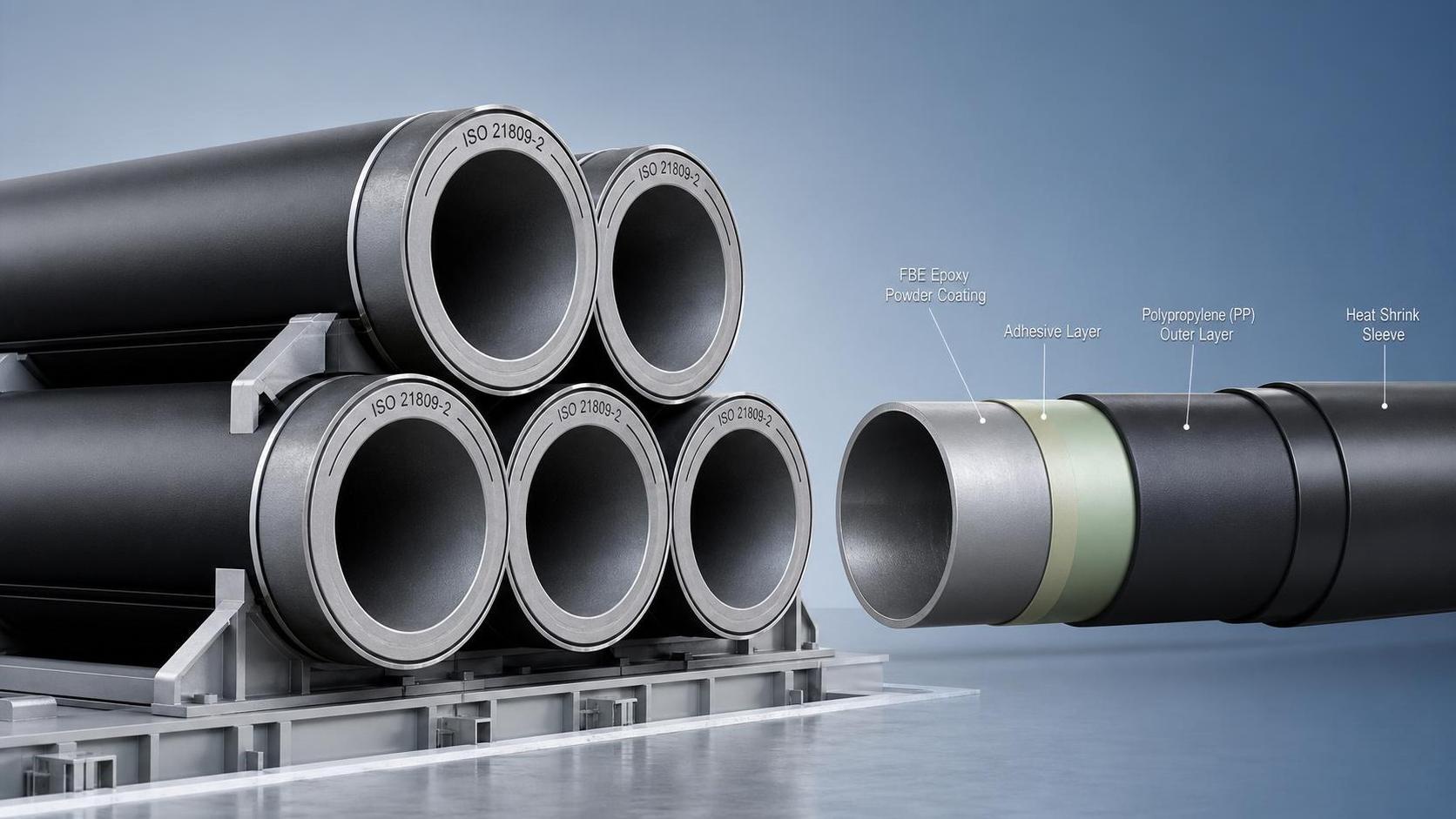
When Lead Times Swing—How Project Timing Changes 3PE Pipe Sourcing Logic
In early-stage planning for a cross-border gas transmission corridor, lead time volatility isn’t just a scheduling footnote—it reshapes material qualification, coating batch coordination, and even pipe mill allocation priorities. Projects launching in Q2–Q3 2026 face extended 3PE pipe delivery windows, now averaging 22–28 weeks versus the 14–18-week baseline seen in 2023. This isn’t uniform delay; it’s layered risk.
The bottleneck sits upstream: ethylene copolymer supply for the adhesive layer, coupled with constrained capacity at certified 3PE extrusion lines. In practice, this means procurement teams can no longer treat “3PE pipe” as a single SKU. A 24-inch, X70-grade pipe ordered for an onshore compressor station may share a coating line with a 48-inch, X80 offshore trunkline—but their testing protocols, inspection timelines, and quality documentation paths diverge sharply.
Timing also exposes hidden dependencies. For example, projects requiring API RP 5L2-compliant cathodic disbondment testing must schedule lab slots months ahead—yet those labs are now booked 11 weeks out. Delayed test reports stall final acceptance, regardless of pipe arrival date.
Where Coating Material Shortages Hit Hardest—Three Real-World Pressure Points
Material scarcity isn’t abstract—it concentrates where regulatory rigor, environmental exposure, and mechanical stress intersect. Three scenarios reveal distinct pressure points:
- Offshore subsea pipelines demanding FBE primer + 3PE overcoat: Dual-layer certification requirements mean fewer qualified suppliers—and longer lead times when epoxy resin shipments are delayed at port.
- High-salinity desert installations (e.g., GCC region): Accelerated UV degradation of outer polyethylene requires stabilizer packages sourced from only two EU-based producers—creating single-source exposure.
- Retrofit projects replacing legacy bare-steel mains in urban corridors: Tight right-of-way constraints demand field-applied alternatives to factory-coated 3PE pipe, but most field-wrap systems lack DNV-RP-F103 compliance for high-pressure service.
What ties these together isn’t geography or diameter—it’s how coating performance thresholds map to site-specific failure modes. A supplier that meets ISO 21809-1 for general burial may fall short on ASTM G155 UV cycling data needed for above-ground transitions in arid zones.
Beyond “3PE Pipe”: Evaluating Coating Alternatives Without Compromising Integrity
Switching away from traditional 3PE pipe doesn’t mean downgrading. It means matching coating architecture to functional priority—not defaulting to familiarity. Consider these alternatives not as substitutes, but as context-aligned options:
None eliminate 3PE pipe entirely—but each reduces dependency on its longest poles in the supply chain. The key is verifying performance *at the interface*, not just compliance with generic standards.
Common Misjudgments That Amplify Risk
Several assumptions quietly escalate exposure:
- Assuming all “3PE pipe” carries identical adhesive formulations—yet some mills use maleic anhydride-modified PE while others rely on vinyl acetate copolymers, with different moisture resistance profiles.
- Treating coating thickness as interchangeable across grades—whereas X80 pipe often requires thicker adhesive layers to prevent disbondment under higher hoop stress.
- Overlooking that alternative coatings may require modified welding procedures (e.g., preheat adjustments for PP overcoats near girth welds).
These aren’t edge cases. They’re routine decisions made during engineering review—without updated material-specific guidance.
Next Steps: Building Resilience into Your 2026 Pipeline Procurement
Start by mapping your next 3PE pipe order against three anchors:
- Confirm which ISO 21809-2 annexes apply—not just the base standard. Annex E (offshore) and Annex F (high-temperature) trigger different raw material traceability requirements.
- Require mill test reports showing peel strength at both ambient and elevated temperatures—not just room-temperature values.
- Engage coating suppliers directly—not just pipe mills—to validate current ethylene copolymer inventory levels and alternative stabilizer availability.
Resilience here isn’t about finding a single “backup” option. It’s about understanding where your 3PE pipe specification intersects with real-world material constraints—and designing flexibility into the technical boundaries themselves.
Can't find what you're looking for ?
Leave a Message we will call you back quickly!
Product Classification