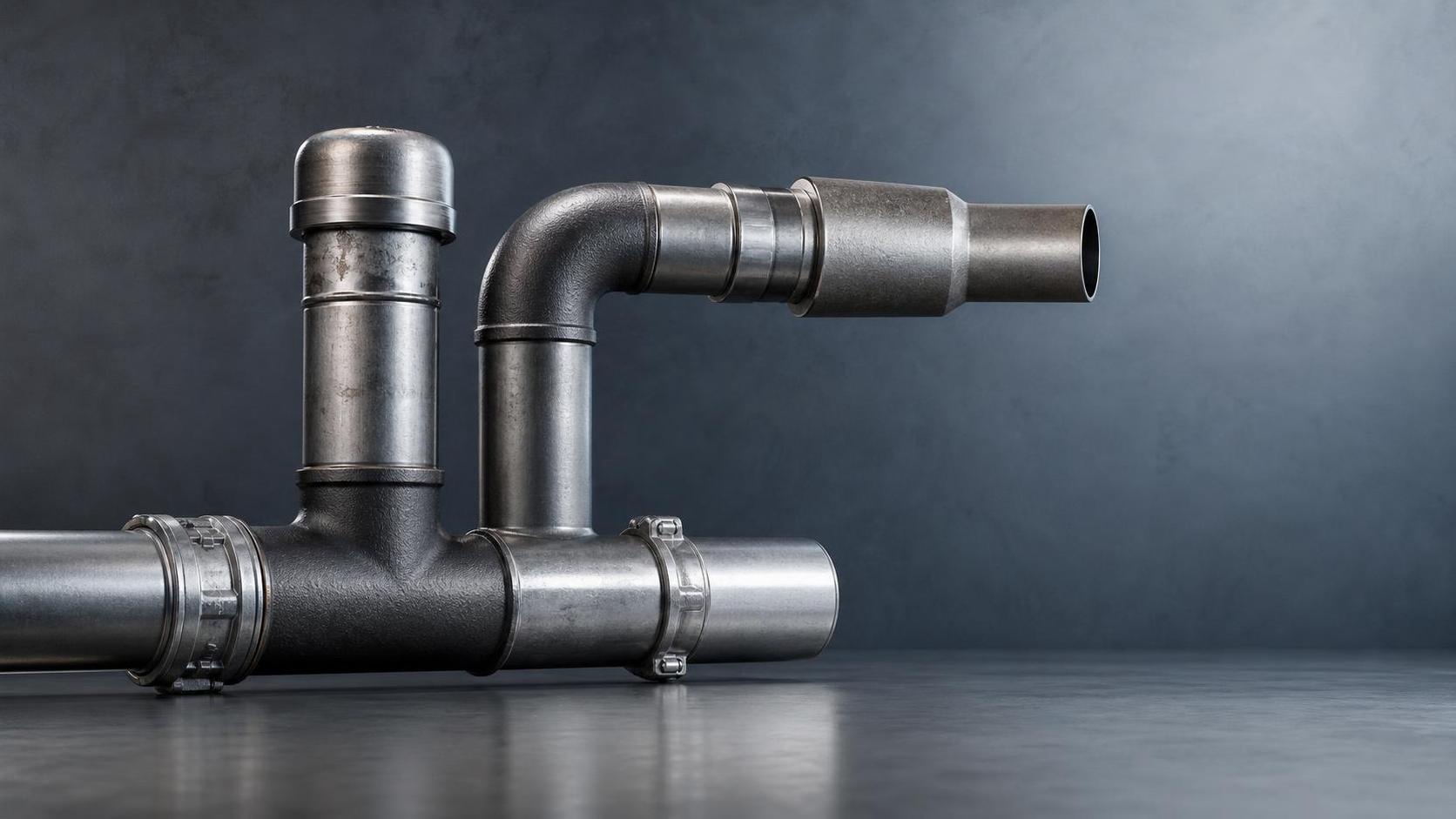
Why do Steel Pipe Fittings matter so much in piping systems?
Steel Pipe Fittings are the parts that let a piping system change direction, branch, reduce size, or close a line safely.
Without them, pipe runs would be rigid, harder to install, and far less adaptable to real project layouts.
In practical terms, these fittings support flow control, structural stability, maintenance access, and future system changes.
That is why Steel Pipe Fittings appear in oil and gas lines, fire protection, HVAC, process plants, water systems, and steel structure support work.
The main value is not just connection. It is reliable connection under pressure, temperature, vibration, and corrosion exposure.
When people compare options, they usually want to know three things: what the fitting does, where it fits, and what can go wrong if the choice is poor.
What types of Steel Pipe Fittings are most common?
The easiest way to understand Steel Pipe Fittings is to group them by function rather than by catalog name.
Some redirect flow, some split it, some change pipe size, and some terminate or join sections.
- Elbows: used to change direction, usually 45 or 90 degrees.
- Tees: create a branch line from a main run.
- Reducers: connect different pipe diameters.
- Couplings: join two pipe sections in a straight line.
- Caps and plugs: close the end of a pipe or opening.
- Crosses and unions: used where multi-branch access or easier disassembly is needed.
Material form also matters. Carbon steel fittings are common in general industrial service, while stainless steel fittings suit corrosive or hygiene-sensitive environments.
Another useful distinction is how they connect. Common forms include butt weld, socket weld, threaded, grooved, and flanged ends.
A fitting may look simple, but its end connection often decides installation speed, sealing reliability, and maintenance difficulty.
A quick comparison table helps clarify the basics
The table below summarizes how common Steel Pipe Fittings are usually judged during early research.
Where are Steel Pipe Fittings used, and does application change the choice?
Yes, application changes almost everything. The same fitting shape can perform very differently depending on service conditions.
In water transmission, the priority may be corrosion protection and leak resistance. In steam lines, temperature and pressure class move higher on the list.
For chemical processing, material compatibility becomes more important than basic shape alone.
In structural or utility installations, Steel Pipe Fittings may also be selected for mechanical strength and installation convenience.
More common application-based decisions include the following.
- Process piping: favors standards compliance, weld integrity, and pressure rating.
- Fire protection: often values dependable sealing and code-approved connection methods.
- HVAC and utility lines: often balance cost, speed of assembly, and service access.
- Outdoor steel systems: usually need coating, galvanizing, or stainless options.
A good early question is not only, “Which fitting type is needed?” It is also, “What operating environment will this fitting face over time?”
How do you compare materials, end connections, and standards without getting lost?
This is where many first comparisons become confusing, because several variables overlap at once.
A practical approach is to review Steel Pipe Fittings in three layers: material, connection style, and standard compliance.
Material choice
Carbon steel is widely used for strength and cost efficiency. Stainless steel is preferred where corrosion resistance or cleaner service conditions matter more.
Alloy steels may be selected for elevated temperature or more demanding pressure service.
Connection style
Butt weld fittings usually suit larger or higher-integrity systems. Threaded fittings work well for smaller lines and easier field assembly.
Socket weld designs are compact, while grooved or flanged systems can simplify maintenance or future replacement.
Standards and sizing
Dimensions, wall thickness, pressure rating, and manufacturing requirements usually follow standards such as ASME, ASTM, or MSS.
The key point is simple: a fitting is not fully defined by name alone. Size, schedule, grade, and end type must match the pipe system.
When those details are missing, comparison becomes unreliable, even if the part description seems familiar.
What mistakes are common when choosing Steel Pipe Fittings?
Most selection mistakes come from treating fittings as minor accessories instead of pressure-containing components.
One common error is focusing only on outside shape. Two elbows may look similar but differ in wall thickness, material grade, and connection form.
Another issue is ignoring the service medium. Water, compressed air, steam, slurry, and chemicals create very different performance demands.
Installation conditions matter too. Tight spaces, welding restrictions, or inspection requirements may rule out otherwise acceptable options.
The table below highlights frequent risks and the better question to ask before deciding.
How should you evaluate cost, lead time, and long-term value?
Price matters, but Steel Pipe Fittings should be judged in context.
A lower-cost fitting can still be the more expensive choice if it requires extra welding, frequent replacement, or tighter inspection later.
Lead time also changes decision quality. Standard carbon steel fittings are often easier to source, while special grades or uncommon sizes may take longer.
In actual projects, a balanced review usually includes these points.
- Initial part cost versus installation labor.
- Availability of standard sizes and schedules.
- Inspection, welding, or testing requirements.
- Coating, corrosion allowance, or material upgrade needs.
- Expected service life and replacement difficulty.
This kind of review is especially useful when comparing threaded, welded, or stainless options that serve the same layout but behave differently over time.
What is the best next step when narrowing down Steel Pipe Fittings?
Start with the system conditions, not the catalog page.
List pipe size, wall schedule, medium, pressure, temperature, corrosion exposure, and preferred connection method.
Then compare Steel Pipe Fittings by compatibility with those conditions, not by name alone.
It also helps to separate must-have requirements from flexible preferences. That makes tradeoffs easier when lead time, cost, or availability change.
At a basic level, the right fitting should match the pipe, suit the service environment, and support safe installation and maintenance.
If you are still comparing options, build a short checklist around material grade, standard, size, end connection, and operating conditions.
That simple step usually turns a broad search into a practical selection process, with fewer errors and clearer decisions.
Can't find what you're looking for ?
Leave a Message we will call you back quickly!
Product Classification