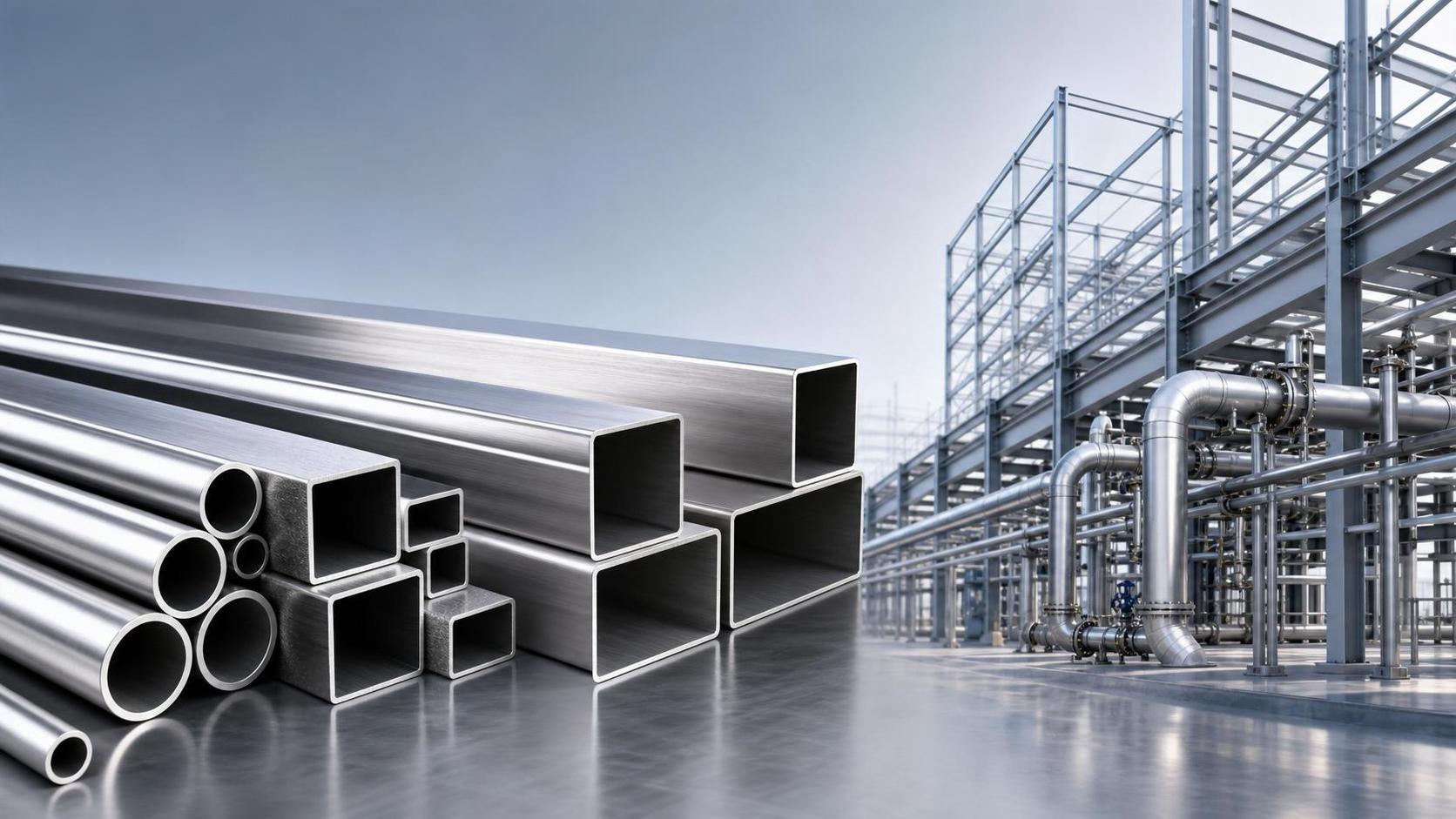
Stainless Steel Tubes are used across industrial and commercial projects because they solve several material problems at once. They carry fluids, support structures, resist corrosion, and maintain a clean appearance in visible spaces.
That combination matters in steel and profile applications where service life, hygiene, load performance, and maintenance costs all affect the final decision. A tube may look simple, yet its grade, finish, and form often shape how reliable a project becomes.
In practice, Stainless Steel Tubes appear in plant piping, building frameworks, food production lines, medical devices, transport equipment, and interior fit-outs. Knowing where they fit best helps turn material selection into a practical engineering judgment rather than a generic purchase.
Why Stainless Steel Tubes Matter Beyond Basic Metal Supply
A stainless steel tube is a hollow section made from stainless alloy, usually produced as round, square, or rectangular tubing. Its value comes from the balance between strength, corrosion resistance, formability, and surface quality.
That balance makes Stainless Steel Tubes different from ordinary carbon steel tubing. Carbon steel may offer lower upfront cost, but it often needs coatings, more maintenance, or faster replacement in wet, chemical, or sanitary environments.
Commercial projects also benefit from appearance. Stainless surfaces can stay visually clean for years, which is why the same material family can work in both hidden processing lines and exposed architectural details.
More attention is now placed on lifecycle cost. A tube that lasts longer, cleans more easily, and avoids corrosion-related shutdowns can justify a higher purchase price without being treated as a premium-only option.
Where Stainless Steel Tubes Are Commonly Used
The use of Stainless Steel Tubes varies by project type, but several patterns appear consistently. Some applications depend on mechanical performance, while others depend on cleanliness, weather resistance, or visual finish.
Fluid transport and process systems
One of the most important uses is moving liquids and gases. Industrial systems rely on tubes for water, steam, compressed air, chemicals, fuel, and processed media.
In these settings, Stainless Steel Tubes are chosen because internal corrosion can contaminate product flow, reduce wall thickness, and increase leakage risk. Stainless grades help control those issues, especially in aggressive environments.
Structural frameworks and load-bearing assemblies
Square and rectangular tubes are widely used in frames, supports, guard systems, platforms, and modular structures. Their closed-section shape provides good stiffness with efficient material use.
This matters in factories, transport hubs, warehouses, and commercial buildings. Designers often use Stainless Steel Tubes where the structure faces humidity, washdown, or outdoor exposure.
Sanitary and hygienic environments
Food processing, beverage production, pharmaceuticals, and healthcare settings require materials that can be cleaned repeatedly without degrading. Smooth surfaces and corrosion resistance make stainless a practical choice.
Here, Stainless Steel Tubes are not selected only for durability. They also support hygiene control by reducing surface damage, limiting rust formation, and making regular cleaning more consistent.
Architectural and decorative use
Handrails, balustrades, storefront systems, canopies, and interior fittings often use polished or brushed tubing. In these cases, visual quality matters almost as much as structural performance.
The same tube can serve as both a design element and a functional member. That dual role explains why Stainless Steel Tubes remain common in commercial spaces with high public visibility.
Typical Project Areas and What They Demand
Different sectors ask different things from tubing. Looking at common use cases makes selection criteria easier to understand.
This range shows why Stainless Steel Tubes are rarely evaluated on price alone. The same product category supports very different performance targets, and the right choice depends on exposure, load, and service conditions.
What Buyers and Specifiers Usually Look At
Tube selection often starts with shape and size, but that is only the visible part of the decision. Several technical factors affect whether the tube actually fits the project.
Grade and corrosion environment
Grades such as 304 and 316 are common, yet they are not interchangeable in every setting. Indoor dry applications may suit 304, while marine, chloride, or chemical exposure often pushes selection toward 316.
Choosing the wrong grade can create visible staining or pitting long before the project reaches its expected service life. That is why environment comes before appearance.
Welded versus seamless
Welded tubes are common for structural, decorative, and many processing uses. Seamless tubes are often preferred where pressure, temperature, or critical tolerance requirements are more demanding.
The choice should follow actual service conditions. Using seamless material everywhere can increase cost without improving performance where it is not needed.
Surface finish and fabrication route
Finish affects more than looks. A smoother surface can improve cleanability, reduce contamination hold points, and influence how a tube performs in visible installations.
Fabrication also matters. Bending, welding, polishing, and passivation can all change final performance, especially where corrosion resistance at joints becomes a concern.
Practical Advantages in Real Projects
The practical value of Stainless Steel Tubes becomes clearer when looking at the problems they help prevent. They are often selected to reduce operational friction rather than to add complexity.
- Less frequent replacement in corrosive or wet environments.
- Lower cleaning difficulty in sanitary systems.
- Good structural efficiency for frames and supports.
- Stable appearance in exposed commercial installations.
- Compatibility with many fabrication and finishing methods.
These advantages do not remove the need for correct specification. Stainless is resistant, not indestructible. Poor grade selection, weak weld treatment, or unsuitable cleaning chemicals can still shorten service life.
Common Mistakes When Evaluating Stainless Steel Tubes
A common mistake is treating all stainless tubing as the same product. In reality, alloy composition, wall thickness, tolerance, and finish can produce very different results.
Another issue is separating the tube from the full assembly. A high-quality tube can still fail if fittings, weld consumables, or adjacent materials create galvanic or contamination problems.
It is also easy to focus too much on initial cost. For projects with long service periods, shutdown risk, cleaning demands, or public-facing finishes, the lowest unit price may lead to the highest total cost.
How to Make the Next Decision More Accurate
A useful starting point is to define the tube’s role before comparing quotes. Is it carrying media, supporting load, meeting hygiene rules, or serving as a visible architectural element?
Then match the application to a shortlist of factors: grade, shape, wall thickness, finish, fabrication needs, and expected exposure. That approach gives Stainless Steel Tubes a clear evaluation framework instead of a generic material label.
For industrial and commercial projects, the best next step is usually simple. Review the environment, define the service requirement, compare standards and finishes, and confirm whether the tube is meant to optimize durability, hygiene, structure, or appearance.
When those points are clear, Stainless Steel Tubes become much easier to assess, and material decisions tend to support the project long after installation is complete.
Can't find what you're looking for ?
Leave a Message we will call you back quickly!
Product Classification