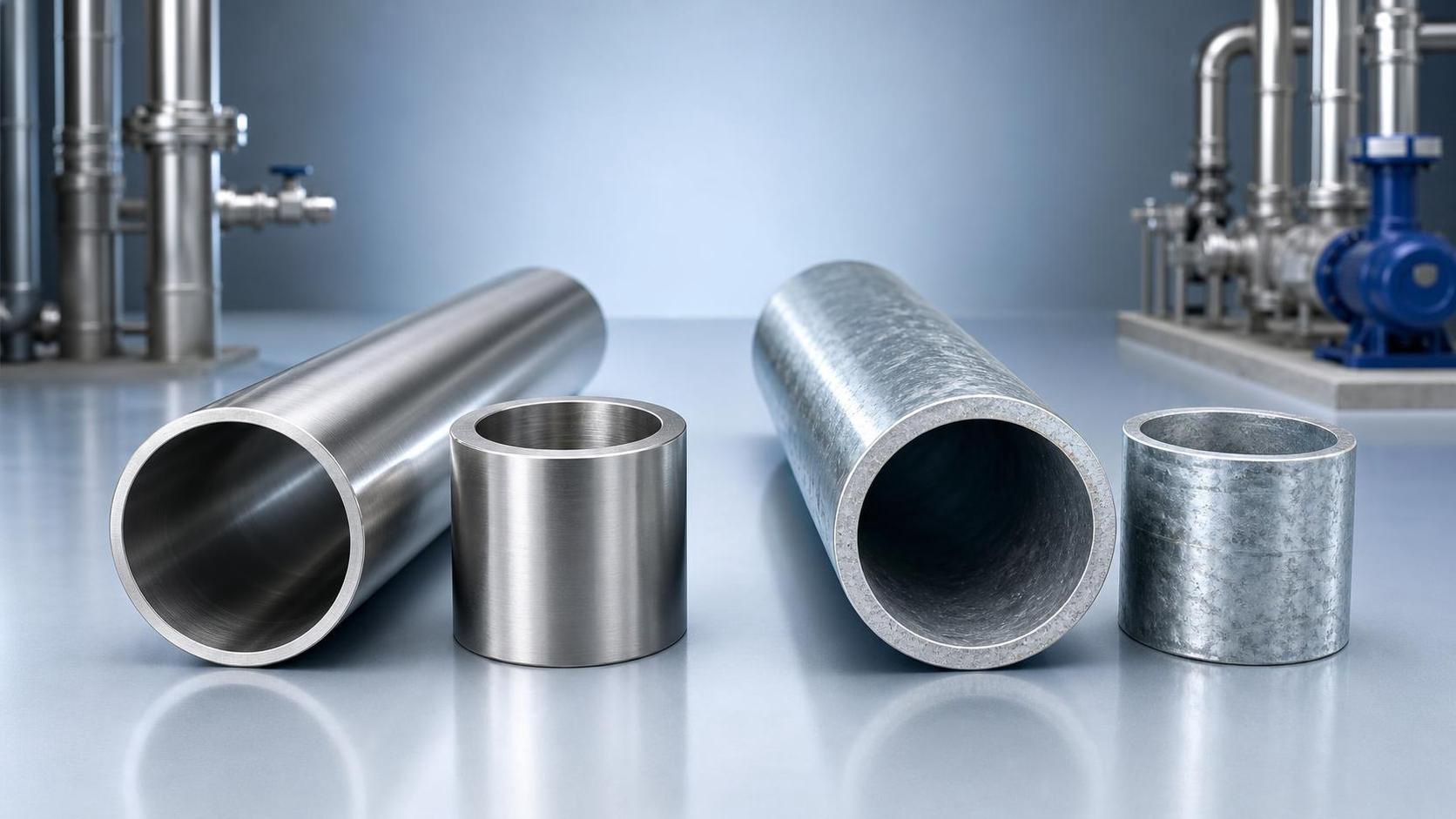
Galvanized Water Pipe vs Stainless Steel: Key Differences
Choosing the right water pipe material can significantly affect system durability, corrosion resistance, maintenance costs, and long-term performance.
When comparing galvanized water pipe and stainless steel, the decision rarely comes down to price alone.
Service environment, water quality, design life, and maintenance access all shape the better option.
A water pipe that performs well in one building or utility system may fail early in another.
This article breaks down the core differences in strength, corrosion behavior, installation, cost, and application fit.
The goal is simple: support a more accurate specification decision for short-term practicality and long-term reliability.
Material Basics and How They Work
A galvanized water pipe is typically carbon steel coated with zinc.
That zinc layer acts as a sacrificial barrier, delaying rust when the surface is exposed to moisture.
Stainless steel water pipe works differently.
Its corrosion resistance comes from alloy content, mainly chromium, which forms a passive oxide film.
This difference matters because coatings can wear away, while stainless protection is built into the material itself.
In practical terms, galvanized water pipe depends heavily on coating condition, while stainless steel depends more on grade selection and media compatibility.
Corrosion Resistance: The Main Decision Point
For most water pipe evaluations, corrosion resistance is the first serious filter.
Galvanized water pipe performs reasonably well in mild, non-aggressive service, especially where budgets are tight.
However, its zinc layer gradually depletes.
Once that layer breaks down, the underlying steel becomes vulnerable to rust, scaling, and reduced flow capacity.
This is more noticeable in systems with fluctuating water chemistry, oxygen exposure, or long idle periods.
Stainless steel usually offers stronger long-term corrosion resistance, especially in clean water and controlled process systems.
That said, stainless is not immune to failure.
Chloride-rich water can trigger pitting or crevice corrosion if the wrong grade is selected.
For example, 304 stainless may struggle where chloride levels are elevated, while 316 often performs better.
So the real comparison is not “corrosion resistant versus not corrosion resistant.” It is “limited coating protection versus grade-dependent alloy protection.”
When corrosion risk is higher
- Choose stainless steel for humid spaces, variable water chemistry, and systems needing long service intervals.
- Use galvanized water pipe more carefully in dry, lower-risk installations with easier inspection access.
- Check chloride content before finalizing a stainless steel water pipe grade.
Strength, Pressure Handling, and Service Life
Both materials can meet water pipe strength requirements when properly specified.
The deeper issue is how strength changes over time.
Galvanized water pipe starts with solid mechanical performance, but internal corrosion can reduce effective wall integrity.
Mineral buildup may also narrow the bore and increase pressure loss.
Stainless steel generally maintains more stable internal conditions over time.
That supports predictable flow, cleaner surfaces, and lower risk of hidden deterioration.
In long-life infrastructure, this can change the economics more than the initial material price suggests.
If a water pipe system is expected to operate for decades with minimal shutdowns, stainless steel usually has the stronger lifecycle case.
Typical service life view
Installation, Fabrication, and Field Practicality
Installation realities often influence water pipe selection more than spec sheets do.
Galvanized water pipe is familiar in many markets and may align well with existing threaded system practices.
That can reduce training needs for smaller projects or maintenance replacements.
Still, field cutting and threading can expose bare steel, which may reduce corrosion protection at joints.
Stainless steel water pipe usually demands tighter control during fabrication and joining.
Welding quality, surface cleanliness, and contamination control matter much more.
Iron contamination from tools or poor handling can compromise the passive layer.
However, when installation discipline is strong, stainless systems tend to reward that effort with cleaner long-term operation.
This is why project capability should be evaluated alongside the water pipe material itself.
Cost: Initial Price Versus Lifecycle Cost
Initial cost is where galvanized water pipe often looks attractive.
Material pricing is usually lower, and the supporting supply chain is often broad.
For temporary systems, low-risk utility lines, or cost-sensitive upgrades, that matters.
Stainless steel water pipe usually costs more upfront, sometimes significantly more depending on grade and size.
But replacement frequency, leak risk, downtime cost, and maintenance labor can shift the final balance.
In critical service, a cheaper water pipe can become the more expensive choice over the asset life.
A sound evaluation should compare total installed cost, inspection burden, repair exposure, and expected years of stable operation.
Cost questions worth asking
- How difficult is future replacement once the water pipe is in service?
- What is the cost of one leak, shutdown, or contamination event?
- Will water quality or system temperature accelerate corrosion?
- Is the project optimized for first cost or full lifecycle value?
Best-Fit Applications for Each Water Pipe Option
Neither option is universally better.
The better water pipe is the one that fits the operating conditions and project priorities.
Galvanized water pipe often fits
- General utility systems with moderate corrosion exposure.
- Budget-driven projects with manageable maintenance access.
- Retrofit work where matching existing steel piping is important.
- Applications where shorter service life is commercially acceptable.
Stainless steel water pipe often fits
- Potable water systems needing clean internal surfaces.
- Industrial or commercial systems with long design life targets.
- Installations where downtime is expensive or hard to schedule.
- Corrosion-sensitive environments requiring stronger long-term stability.
How to Make the Final Selection
A good water pipe decision starts with the service conditions, not the catalog page.
Review water chemistry, expected temperature, pressure profile, accessibility, and required design life.
Then compare material behavior under those exact conditions.
If the environment is mild and capital cost leads the decision, galvanized water pipe may be sufficient.
If the system must stay clean, resist corrosion, and avoid frequent intervention, stainless steel is often the stronger answer.
The more critical the system, the more lifecycle thinking should outweigh first-cost pressure.
In many recent projects, that shift is becoming more visible.
Teams are paying closer attention to maintenance exposure, water quality stability, and replacement disruption.
That also means the best water pipe choice is increasingly the one with fewer long-term surprises.
Before locking the specification, confirm the corrosion allowance, joining method, applicable standards, and inspection plan.
That final check usually does more for decision quality than chasing the lowest material number on day one.
Can't find what you're looking for ?
Leave a Message we will call you back quickly!
Product Classification