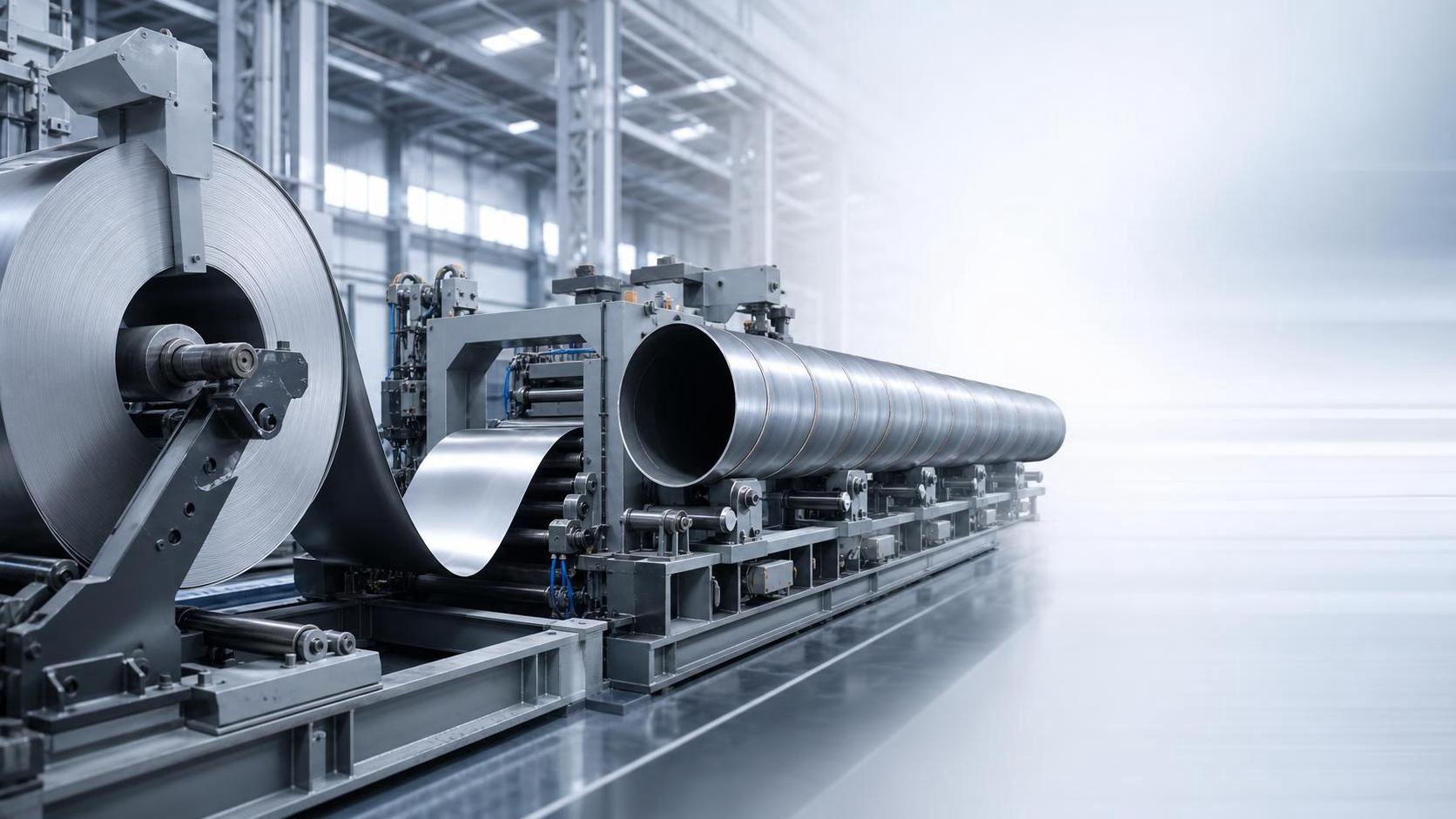
Where Spiral Coils Matter Most in Pipe Production
The real value of Spiral Coils in pipe manufacturing shows up long before a finished pipe reaches hydrotest or shipment. It starts at the uncoiler, at the slitter, and in the way a mill team tries to keep line speed stable while material yield stays under control. When a plant is producing spiral welded pipe for mixed orders, especially with changing diameters or wall thicknesses, coil selection is not a background purchasing detail. It affects scrap at both ends of the strip, weld seam stability, changeover frequency, and how much downtime is quietly built into the schedule.
That is why experienced production managers usually discuss coil configuration together with forming parameters, not separately. A Spiral Coil that looks acceptable on paper can still create trouble if width consistency is weak, edge condition is poor, or the coil build does not match the line’s handling limits. In a spiral pipe mill, material flow is continuous. Small variation upstream often becomes visible downstream as seam tracking issues, extra trimming, or pauses that were never planned into the shift.
Material Yield Is Decided by More Than Steel Weight
People sometimes reduce the discussion to one question: how many tons came in and how many tons shipped out. That is too narrow. With Spiral Coils, material efficiency is tied to how closely the strip width fits the target pipe geometry and how consistently the mill can hold forming conditions across the whole coil. If width selection is off, the plant may still make saleable pipe, but it often pays for it through edge trimming, more difficult forming control, or reduced flexibility on diameter range.
This is especially visible in facilities serving water transmission, piling, structural tube, or energy-related projects where order sizes vary. One production run may favor long coil lengths to reduce joining interruptions. Another may prioritize a width combination that minimizes leftover strip when matching a specific outside diameter. There is no universal “best” Spiral Coil setup. The right answer depends on whether the mill is trying to maximize throughput on a stable product family or respond to short-run orders with frequent specification changes.
In practice, teams usually watch three things together: coil width utilization, end-of-coil losses, and how much process instability appears as the coil progresses. A coil that gives slightly better theoretical yield can still be the weaker option if it creates more stoppages or weld adjustment time. That tradeoff gets missed when planning is handled only from a purchasing cost angle.
When High Throughput Is the Priority
In mills built around volume production, Spiral Coils are often judged by one practical standard: can the line keep moving without forcing operators to compensate for the material every few minutes? Stable feed matters more than impressive nominal coil size. Heavy coils may reduce the number of coil changes, which looks attractive in planning meetings, but the benefit only holds if the decoiling, leveling, and edge presentation remain predictable across the run.
Where the line is already well balanced, longer uninterrupted feed can improve production flow in a very direct way. Fewer stops mean fewer restarts, and restarts are where quality drift often appears. Forming angle, seam fit-up, tack behavior, and weld heat input all have an easier job when the mill is not constantly breaking rhythm. For that reason, Spiral Coils are often favored in operations where delivery commitments depend on maintaining a narrow production window over multiple shifts.
But there is a limit. If coil size pushes handling equipment near its capacity, the plant may exchange one kind of efficiency for another kind of risk. Mandrel stress, crane coordination, coil loading time, and safety margin at the uncoiler all need checking. Shops that ignore those practical limits usually discover the problem not in yield reports, but in awkward line interruptions and maintenance calls.
Short Runs, Mixed Orders, and Why Coil Flexibility Matters
A different pattern appears in mills handling project-driven work. Here, the challenge is not squeezing every possible hour from a single product run. It is keeping the production schedule realistic when pipe diameters, wall thicknesses, lengths, or end-finish requirements change from one order to the next. Spiral Coils support this environment when they help the mill reduce setup waste and avoid carrying awkward remnants that do not fit upcoming jobs.
This is where planners need a more disciplined view of coil width strategy. A width that is ideal for one pipe size may create poor utilization on the next. If the order book is fragmented, the mill benefits from coil programs that support a workable range of products rather than chasing a perfect match for only one run. That usually means balancing theoretical material yield against scheduling convenience and inventory turnover.
Operators also pay attention to how quickly a line can settle after a changeover. Some material combinations allow a faster return to stable seam alignment and dimensional control. Others require more trial adjustment. That lost time rarely appears in a simple cost-per-ton estimate, but it has a real effect on due dates. In mixed-order environments, Spiral Coils that reduce setup sensitivity are often more useful than coils optimized only for raw material arithmetic.
Edge Condition and Coil Consistency Are Not Minor Details
When engineers talk about Spiral Coils improving production flow, they are not only talking about dimensions. Coil consistency is part of the story. Variations in strip crown, camber, edge wave, or surface condition can complicate forming and welding even if the nominal width and thickness are correct. In a spiral mill, the strip is continuously guided into a helical path. That makes edge presentation especially important because the weld seam depends on stable geometry over time, not just at the beginning of the run.
This is one reason experienced teams are cautious about assuming that any available coil is interchangeable. A purchasing decision made without attention to forming behavior can create hidden process cost. Extra operator intervention, slower line speed, more seam monitoring, and additional rejection risk can outweigh a favorable material price. None of that requires dramatic material defects. Even moderate inconsistency can erode the smooth production flow that Spiral Coils are supposed to support.
Where quality requirements are tight, such as projects with stricter dimensional control or inspection intensity, the mill usually has less room to absorb inconsistent feedstock. The lesson is straightforward: material utilization is not only about reducing scrap. It is also about avoiding avoidable disruption.
What Plant Teams Usually Check Before Locking the Coil Plan
That last point is often underestimated. A plant can improve forming uptime with better Spiral Coil planning and still lose the benefit if hydrotest, beveling, coating, or dispatch cannot keep pace. Production flow is not only the coil-to-pipe transition. It includes what happens after forming. Good mills plan coil usage with the whole route in view.
Downstream Coordination Changes the Answer
Some of the most expensive mistakes come from optimizing Spiral Coils for the forming line alone. Suppose a mill pushes for larger or longer-running coils to reduce stoppages. That can work well when downstream inspection and finishing have similar capacity and product rhythm. It works less well when later stations are batch-oriented, labor-constrained, or sensitive to diameter changes. In that case, a very efficient front-end run may simply push inventory into a bottleneck.
This is why project managers often look at coil strategy together with dispatch sequence and test requirements. If the order mix includes different standards, additional NDT steps, or special end preparation, the production plan may benefit from more controlled batch sizing even when it costs a little in coil-change frequency. The better decision is the one that protects delivery reliability across the full process, not the one that makes a single machine center look best for one shift.
Common Misreadings
One common mistake is treating Spiral Coils as a generic raw material category and assuming performance differences are too small to matter. That may be true in forgiving applications. It is less true in mills where the forming line runs near capacity, dimensional tolerance is closely watched, or product variation is high. Another mistake is using only nominal yield calculations while ignoring restart losses, line speed reductions, and operator intervention.
There is also a tendency to assume that a coil setup that worked well for one project will transfer cleanly to another. It might, but only if the production context is similar. Changes in pipe diameter range, wall thickness, seam welding setup, or downstream inspection load can alter the result. Practical judgment here comes from checking whether the process conditions are truly comparable, not from reusing last quarter’s settings by habit.
A More Useful Way to Evaluate Fit
When deciding how Spiral Coils should be used in pipe manufacturing, the strongest question is not “Which option gives the lowest material price?” It is “Which option lets this mill convert steel into finished pipe with the least avoidable disruption for this order mix?” That pushes the discussion toward real operating conditions: width utilization, line stability, coil handling limits, product flexibility, and downstream balance.
If the production program is repetitive and throughput-driven, longer stable runs may justify coil choices that minimize interruption. If the business is project-based and varied, flexibility and schedule control may matter more than the last fraction of theoretical yield. Where quality exposure is high, edge condition and shape consistency deserve more attention than buyers sometimes expect.
That is usually where sound decisions land: not in broad claims about Spiral Coils being better in every case, but in a clear match between coil characteristics and the way the pipe mill actually operates. Before locking a plan, it is worth checking one more time how the selected coil width, weight, and consistency fit the forming line, the order book, and the downstream stations that will have to live with the result.
Can't find what you're looking for ?
Leave a Message we will call you back quickly!
Product Classification