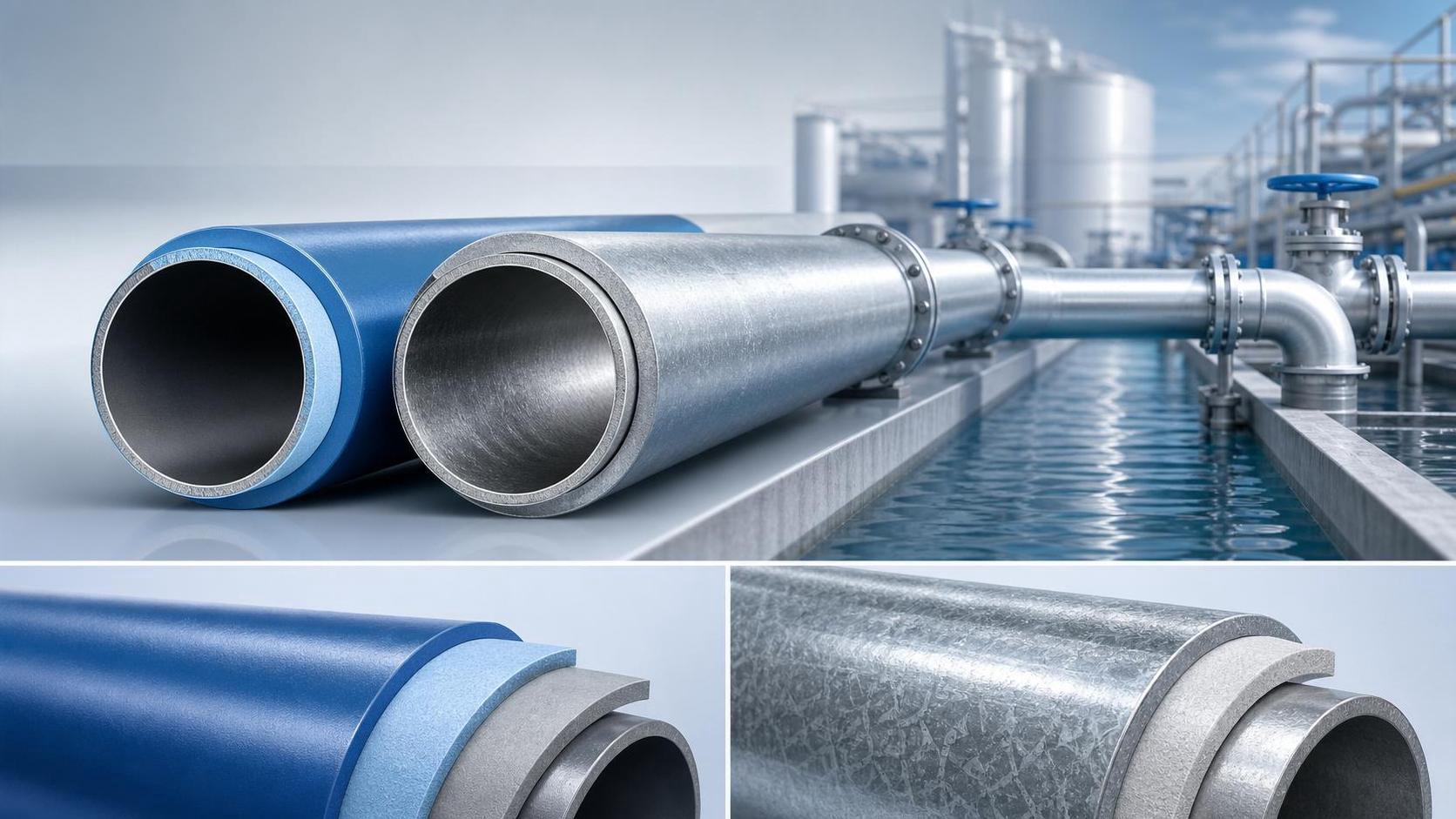
Plastic-Coated Steel Pipe vs Galvanized Pipe: Cost and Service Life
For procurement teams comparing pipeline options, the price tag alone rarely tells the full story.
When evaluating Plastic-Coated Steel Pipe and galvanized pipe, long-term value depends on corrosion behavior, installation conditions, and replacement frequency.
That is why service life matters as much as unit cost.
In many projects, a lower upfront purchase cost can still lead to higher lifetime spending.
This article compares Plastic-Coated Steel Pipe and galvanized pipe from a practical sourcing perspective.
The goal is simple: help buyers choose the option that delivers stable performance and better total cost control.
What Makes These Two Pipe Types Different
Galvanized pipe uses a zinc coating on the steel surface.
Its main purpose is to slow rust by creating a protective metallic layer.
Plastic-Coated Steel Pipe starts with a steel base pipe, then adds an internal, external, or dual polymer coating.
Common coatings include epoxy, polyethylene, or other anti-corrosion materials selected for the service environment.
From a purchasing view, this structural difference shapes almost every cost outcome.
Galvanized pipe usually enters the quote sheet at a lower price.
Plastic-Coated Steel Pipe often costs more initially, but it can reduce corrosion-related expenses later.
Upfront Cost: Which Option Looks Cheaper
On direct material price, galvanized pipe is usually the budget-friendly choice.
Its production process is mature, widely available, and relatively standardized across many markets.
Plastic-Coated Steel Pipe generally carries a premium because of extra coating materials, tighter process control, and more demanding quality inspection.
However, purchase price should be broken into several cost items before any decision is made.
- Base pipe material cost
- Surface treatment or coating cost
- Transport cost, especially for longer project distances
- Installation accessories and joint protection cost
- Inspection, testing, and compliance documentation cost
In actual procurement, the real gap may be narrower than the list price suggests.
This is especially true when the project demands higher corrosion resistance or lower maintenance interruption.
Service Life: Where Plastic-Coated Steel Pipe Gains Value
Service life is the point where Plastic-Coated Steel Pipe often becomes more competitive.
Galvanized pipe performs well in mild and relatively dry environments.
But in humid, chemical, buried, or water-contact conditions, the zinc layer can wear down faster.
Once that protective layer is compromised, corrosion on the steel substrate can accelerate.
Plastic-Coated Steel Pipe offers an added barrier between the steel surface and the operating medium.
That barrier is often the main reason for its longer service life in demanding applications.
Typical life expectancy varies by coating type, operating temperature, fluid chemistry, and installation quality.
Still, Plastic-Coated Steel Pipe usually holds an advantage where corrosion is the primary failure risk.
Maintenance and Replacement Costs Often Decide the Winner
This is where many sourcing decisions become clearer.
A cheaper pipe can become expensive if shutdowns, repairs, and leakage events happen too often.
Galvanized pipe may require earlier replacement in aggressive conditions.
That creates secondary costs beyond the pipe itself.
- Labor for inspection and repair
- Production downtime or service disruption
- Fluid loss or contamination risk
- Safety and compliance exposure
- Future removal and reinstallation cost
Plastic-Coated Steel Pipe tends to reduce these risks when the operating environment is severe.
That does not automatically make it the best choice for every project.
But it often improves total ownership economics where reliability matters more than the lowest opening bid.
Application Environment Changes the Cost Equation
The best pipe choice depends heavily on where and how it will be used.
This is the signal that matters most in practical procurement.
When galvanized pipe may be enough
Indoor dry environments are often suitable.
Shorter project life cycles also support galvanized pipe.
Temporary utility lines can justify the lower initial investment.
Projects with tight budgets and low corrosion exposure often choose this route.
When Plastic-Coated Steel Pipe becomes the smarter buy
Buried installations create a stronger case.
So do coastal, humid, and chemically exposed environments.
Water supply, fire protection, mining, municipal, and industrial systems often benefit from Plastic-Coated Steel Pipe.
Long service expectations also make Plastic-Coated Steel Pipe more attractive from a life-cycle cost standpoint.
How to Compare Total Cost Instead of Unit Price
A sound buying decision should use total cost of ownership, not just a supplier quote.
This approach makes the Plastic-Coated Steel Pipe versus galvanized pipe comparison far more useful.
- Define the service environment clearly, including moisture, soil, chemicals, and temperature.
- Estimate required service life, not just project completion time.
- Ask suppliers for coating specifications, thickness data, and test standards.
- Calculate expected maintenance cycles and downtime cost.
- Review installation conditions, since poor handling can damage coatings and shorten life.
- Compare warranty terms and traceability documents before final approval.
This method usually reveals whether Plastic-Coated Steel Pipe truly offers better value for the intended application.
Common Procurement Risks to Watch
Pipe buying mistakes often come from incomplete technical alignment.
The product may look correct on paper, yet fail early in use.
- Choosing galvanized pipe for a highly corrosive setting
- Buying Plastic-Coated Steel Pipe without confirming coating adhesion and thickness
- Ignoring connection methods and field repair requirements
- Comparing quotes without matching standards or specifications
- Focusing on unit cost while overlooking replacement labor and downtime
A reliable supplier should be able to explain where Plastic-Coated Steel Pipe performs best and where galvanized pipe remains practical.
That level of clarity helps reduce sourcing risk before the order is placed.
Final Decision: Cost Today or Value Over Time
If the project environment is mild and budget pressure is the main concern, galvanized pipe may be the reasonable option.
If corrosion resistance, lower maintenance, and longer service life matter more, Plastic-Coated Steel Pipe usually delivers stronger overall value.
In other words, the better purchase is not always the cheaper line item.
It is the pipe that fits the environment, controls risk, and supports stable operating cost over time.
Before placing a final order, compare coating data, expected life, maintenance assumptions, and installation conditions side by side.
That step will make the Plastic-Coated Steel Pipe versus galvanized pipe decision more accurate, more economical, and easier to defend internally.
Can't find what you're looking for ?
Leave a Message we will call you back quickly!
Product Classification