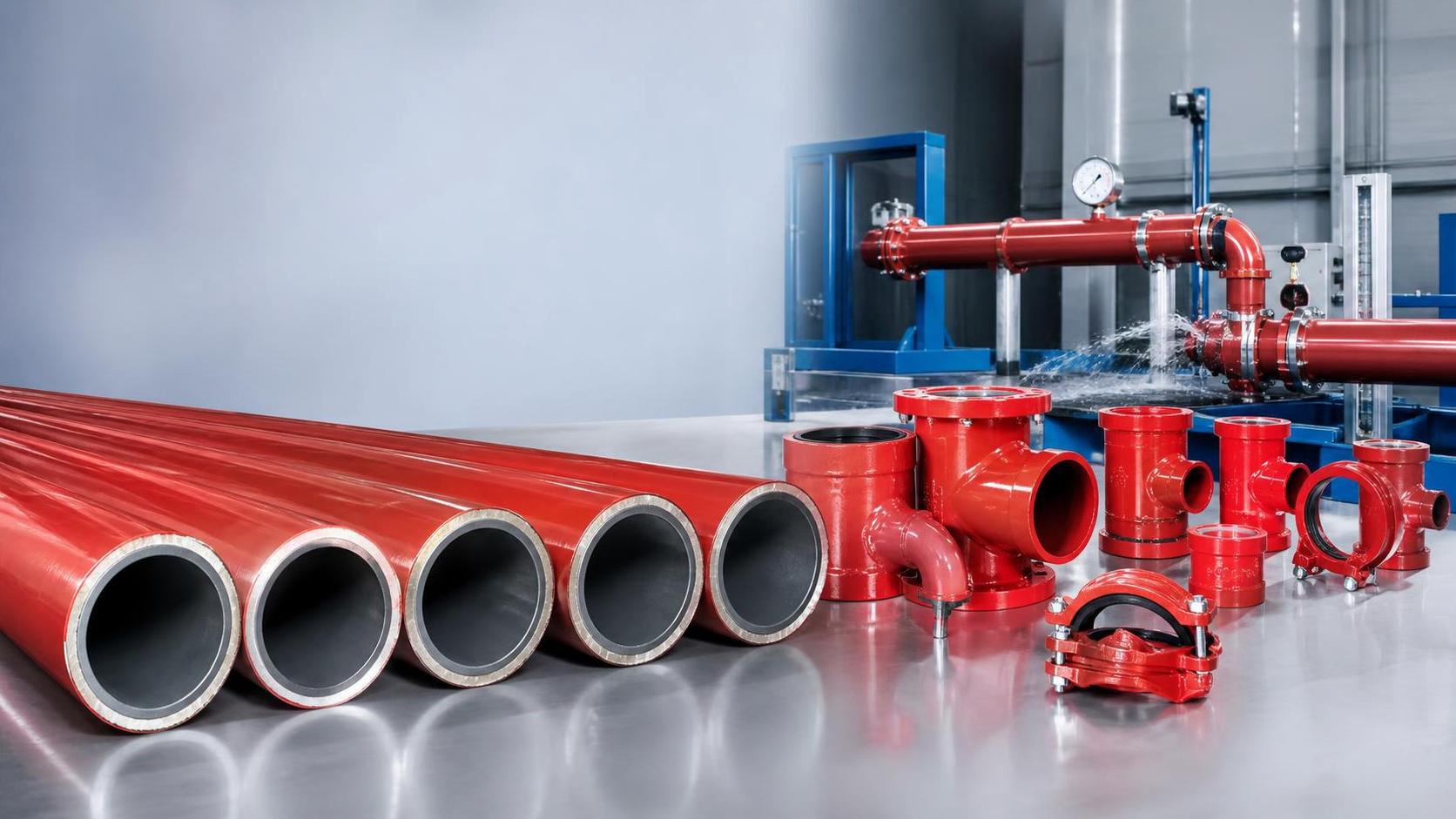
Start with the service condition, not the catalog
When you are selecting Plastic Coated Steel Pipe for a fire protection piping system, the quickest way to make a bad decision is to begin with price or coating color. Start with the actual duty of the line. Is it for wet sprinkler piping, dry or pre-action systems, hydrant lines, underground sections, pump room connections, or indoor exposed runs in a corrosive space? The right pipe for one part of the network can be the wrong one for another.
For quality control and safety management teams, the selection problem is usually not “Does the pipe resist corrosion?” It is “Will this pipe, with this coating, on this substrate, under these installation conditions, still meet system pressure, joining, inspection, and maintenance expectations over time?” That is the level where selection becomes useful and risk starts to come down.
A practical review usually moves in this order: service environment, base pipe, coating system, joining method, pressure and mechanical performance, compliance documents, then incoming inspection. If that order gets reversed, teams often end up approving a pipe that looks acceptable on paper but creates trouble during installation or later inspection.
Define where the pipe will actually live
Before comparing suppliers, write down the exposure conditions for each section of the system. This matters more than many buyers expect. A coated pipe in a climate-controlled plant room sees very different stress from one installed in a parking structure, coastal facility, chemical storage area, or buried transition zone.
- Check whether the pipe will be used indoors, outdoors, underground, or across mixed environments.
- Note if the system is wet or dry. Dry systems can create different internal moisture and corrosion patterns during cycling and drainage.
- Identify local corrosion drivers: salt air, condensate, industrial fumes, cleaning chemicals, UV exposure, or standing water around supports.
- Look at temperature swings. Coating performance is not only about chemical resistance; expansion, contraction, and adhesion under thermal change matter too.
One common mistake is approving a single pipe specification for the entire project because the drawing package groups the fire system as one discipline. In practice, different zones may justify different coating requirements or extra attention at fittings, supports, buried entries, and repair points.
Do not treat the coating as the whole product
A lot of selection errors happen because teams focus on the plastic layer and forget the steel pipe underneath. The coating is only one part of the reliability package. Base material quality, wall thickness, dimensional consistency, end preparation, and manufacturing control all affect whether the pipe performs well once it is grooved, threaded, cut, supported, and pressure tested.
Ask for product documents that clearly identify the underlying steel pipe specification and not just the coating type. If the supplier’s paperwork is detailed about surface appearance but vague about the pipe substrate, slow down. For fire protection work, that gap matters.
During review, check these points together rather than in isolation:
Match the coating system to the installation method
This is where otherwise decent material often gets into trouble. A pipe can have acceptable coating quality and still become a problem if the joining method damages it. Fire protection piping is rarely left untouched after delivery. It gets cut, threaded, grooved, lifted, clamped, aligned, and sometimes reworked on site. Every one of those operations can compromise the coating if the pipe was not selected with installation in mind.
If the project uses grooved couplings, pay attention to how the coating behaves at the groove area and whether the manufacturer provides a defined treatment for cut and exposed edges. If threaded connections are used, review how thread cutting affects coating continuity and whether the selected product is intended for that joining method. Do the same for welded sections, if any are permitted in the project design and local practice. A coating that works well on full-length pipe can still fail early around field-modified ends.
This is also the stage to ask a blunt question: what is the approved repair procedure for coating damage created during installation? Not a sales answer. An actual procedure. If there is no defined method for edge sealing, touch-up material, surface cleaning, and acceptance criteria, the installation crew will improvise, and quality becomes difficult to control.
Pressure performance has to stay credible after coating
For safety managers, pressure integrity is not negotiable. For QC teams, the key point is that coating should not distract from the structural requirements of the pipe. Review the pressure rating, test records, and dimensional tolerances in the same package. If the product documentation highlights corrosion resistance but barely addresses mechanical and hydrostatic performance, you do not yet have enough for a fire system decision.
Be careful with substitutions. A coated pipe proposed as an “equivalent” needs to be checked against the original design basis for diameter, wall schedule or thickness class, joining geometry, and pressure-related acceptance requirements. Substitution problems often show up late, when couplings, fittings, or support spacing no longer line up as expected.
Check the documents that control acceptance, not just the brochure
Fire protection piping selection is document-heavy for a reason. The decision affects life safety, inspection, and future liability. What matters is not broad marketing language but whether the supplied product can be traced to the standards, approvals, and test documents required by the project, jurisdiction, insurer, or owner specification.
The exact requirements vary by market and project type, so review the actual contract documents and approval path. In practice, the useful checks are very specific:
- Compare the purchase specification with the fire protection design documents and material submittal requirements.
- Check whether the product listing or approval, if required by the project, applies to the exact pipe construction and intended use rather than a broader product family name.
- Review mill certificates, coating inspection records, and product identification marking for consistency across the shipment.
- Confirm that the documentation covers the actual size range being purchased. Approval language that applies to one diameter range does not automatically cover all sizes.
For teams managing imported material, check that the supplied documents identify the manufacturer, product description, dimensions, and traceable batch information in a way that matches your receiving and audit process. If traceability breaks at receiving, later inspection becomes much harder.
Inspect the coating like it will be handled roughly, because it will
Incoming inspection should go beyond “surface looks smooth.” In a fire protection project, pipes are moved several times before they are finally in place. Minor damage that seems cosmetic at delivery often becomes the starting point for coating breakdown later, especially near supports, couplings, and cut ends.
A workable receiving checklist usually includes visual and dimensional checks together:
- Inspect for blistering, peeling, pinholes, gouges, bare spots, and crushed ends.
- Check coating continuity around pipe ends, especially if ends will be grooved or threaded on site.
- Verify outside diameter, wall thickness, length, and straightness against the purchase requirement.
- Review packaging and separator method. Poor shipment protection often predicts handling damage before installation even begins.
- Segregate damaged lengths immediately so they do not get installed by mistake during schedule pressure.
If coating thickness measurement is part of your quality plan, make sure the acceptance method is defined before delivery and tied to the product specification. Random testing without an agreed method creates arguments but not control.
Pay attention to fittings, supports, and transitions
The pipe body usually gets most of the attention, but many service problems begin elsewhere. Threads, couplings, reducers, tees, flanges, valves, and transitions to underground or uncoated sections are common weak points. If the project team selects a high-quality Plastic Coated Steel Pipe but leaves these interfaces unresolved, the corrosion protection plan is incomplete.
Support locations deserve a separate look. Repeated vibration, pipe movement, or poorly chosen clamps can wear through an otherwise good coating. In exposed areas, inspect support details and contact surfaces, not just pipe specification. In concealed areas, think about how future inspection will identify damage at supports and low points where moisture may stay longer.
Ask what happens after the pipe is cut open
This sounds obvious, but it is frequently skipped. Every field cut creates a new condition that the factory coating did not finish for you. Selection is stronger when the team knows, before procurement, how exposed steel at cut ends will be treated, how repairs will be inspected, and who owns that work in the installation workflow.
A useful supplier conversation here is not “Can this be repaired?” Almost anything can be “repaired” in theory. The better question is whether the manufacturer has a documented site repair method that matches the joining practice, cure conditions, and inspection routine on your project.
Make the final decision with a short risk screen
Before approval, run the candidate product through a simple screen:
- Does the base pipe meet the project’s structural and dimensional requirements?
- Is the coating system suited to the actual environment, not just general corrosion claims?
- Will the joining method damage the coating or create untreated exposed areas?
- Can the supplier provide traceable documents that match the exact product offered?
- Does your receiving and installation team have a defined inspection and repair process?
If any answer is weak, the selection is not finished yet. For QC and safety teams, the most reliable path is to lock the service condition first, verify the steel pipe and coating as one system, then check how the product will survive cutting, joining, support contact, and documentation review. That sequence catches most of the expensive mistakes before the first length reaches the jobsite.
Can't find what you're looking for ?
Leave a Message we will call you back quickly!
Product Classification