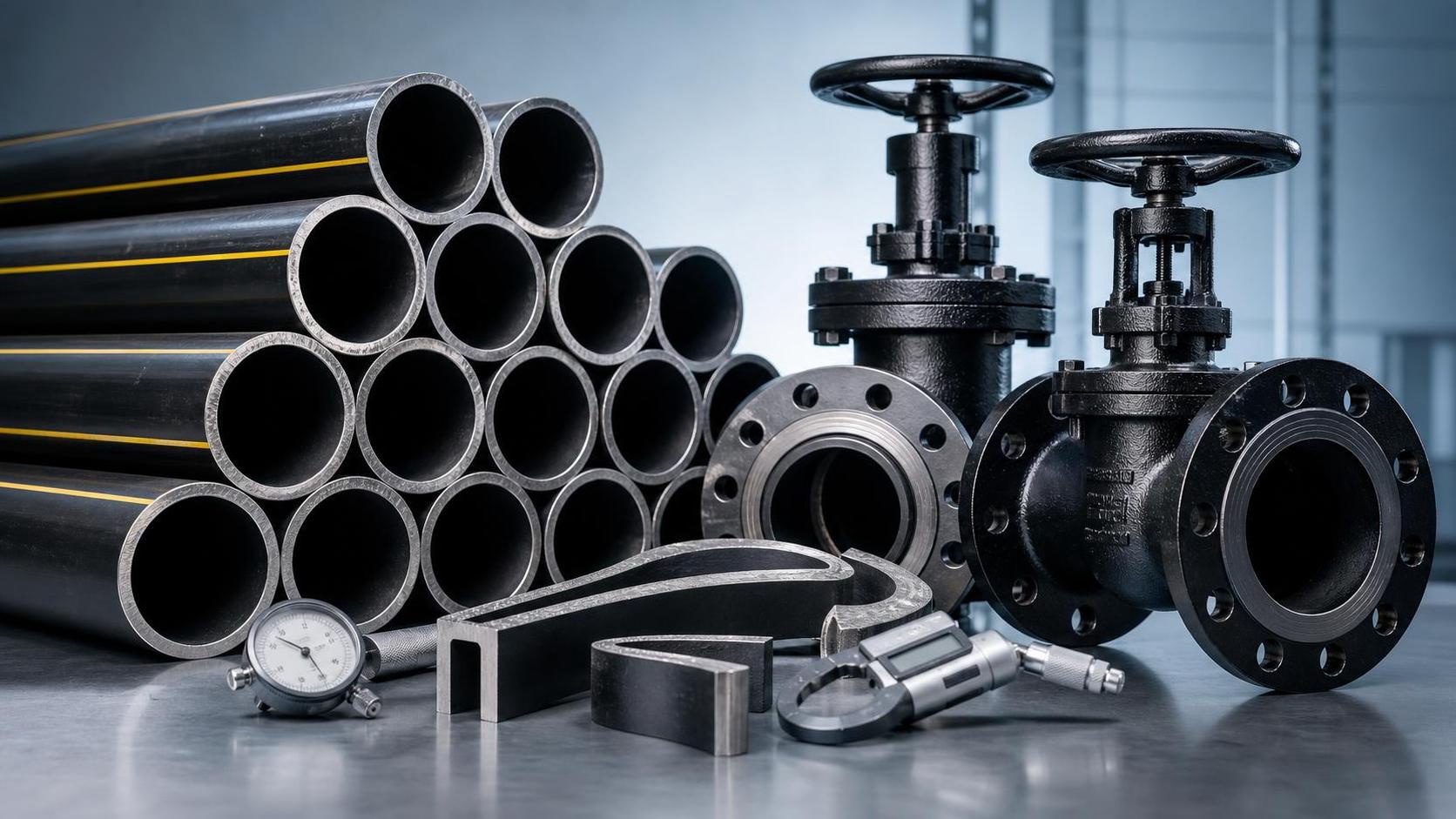
Which Standards Apply to Gas Pipe? A Practical Guide to Codes, Testing, and Approval
Choosing the right gas pipe is not just a procurement issue; it sits directly inside the safety, inspection, and approval chain. A pipe that is acceptable for water, compressed air, or even some industrial fluids may still be wrong for fuel gas service. That is where many practical mistakes begin. People often ask which standard applies to gas pipe as if there were one universal answer. In reality, the answer depends on three things at the same time: what the pipe is made of, where it will be installed, and which code governs the overall gas system.
For quality control and safety management teams, this distinction matters more than the product label. “Gas pipe” is not a single technical category. It may refer to carbon steel pipe for building distribution, welded or seamless steel for industrial fuel gas, stainless steel tubing in specialized systems, copper tube where local codes permit it, or polyethylene pipe for buried outdoor gas networks. Each of those materials falls under different product standards, and the installation itself is usually controlled by a separate fuel gas or pipeline code. A compliant project therefore requires both product conformity and system-level code compliance.
The First Distinction: Product Standard vs. Installation Code
This is the point that gets blurred most often. A product standard tells you how the pipe is manufactured, tested, marked, and dimensioned. An installation code tells you whether that pipe can be used in a specific gas service and how it must be installed, joined, supported, tested, and approved. One does not replace the other.
For example, in steel piping, ASTM standards such as ASTM A53 or ASTM A106 are widely recognized product standards for carbon steel pipe. They cover material composition, mechanical properties, dimensions, hydrostatic testing requirements, and marking rules. But those standards alone do not tell you whether the pipe is acceptable for natural gas piping inside a commercial building. That judgment usually comes from codes such as the International Fuel Gas Code (IFGC), NFPA 54 in the United States, or equivalent national and local regulations elsewhere.
In other words, when a supplier says a pipe is “made to ASTM,” that is only part of the compliance story. The inspection question is broader: does the pipe meet the material standard, and is that standard recognized by the governing code for the intended gas service?
Common Standards You Will Actually Encounter
The standards applied to gas piping vary by market, but several names appear repeatedly in project documents, mill certificates, and inspection records.
That list is not interchangeable. ASTM A53 and API 5L may both describe steel pipe, but they serve different project contexts. One of the most common review errors is assuming that any steel pipe with a familiar size and schedule can be substituted across fuel gas, process piping, and transmission service. It cannot, unless the design basis and governing code allow it.
Material Choice Changes the Standard Set
Steel is still the default reference point in many gas applications, especially black steel pipe for above-ground fuel gas systems. But once the material changes, the standards change with it. Polyethylene pipe used in buried gas distribution, for instance, is typically evaluated under different ASTM or ISO product standards than steel pipe, and it may also require evidence of suitability for gas pressure service, joining method control, and traceability of fittings.
The same applies to corrugated stainless steel tubing, copper tube, and multilayer systems where they are permitted. Acceptance is highly code-specific. A material may be technically sound and widely used in one jurisdiction, but restricted or conditioned in another due to fire performance, mechanical protection, installation practice, or local amendment. From a QC perspective, “approved for gas” is never enough without knowing approved under which code, in which country, and for which installation condition.
What Inspectors and Approvers Usually Look For
When reviewing gas pipe compliance, inspectors generally do not start with the marketing sheet. They start with the traceable documents and the code basis. In practice, that means checking several layers together:
- Product designation and standard reference on the pipe marking
- Mill test certificate or equivalent material documentation
- Nominal size, wall thickness, and schedule against design documents
- Pipe manufacturing method, such as seamless or welded, when specified
- Pressure test requirements for the installed system
- Compatibility and approval status of fittings, valves, and joining methods
- Evidence that local code or project specification recognizes the selected material
This layered review matters because gas incidents are not caused only by base pipe failure. Approval can also fail because of mismatched threads, unlisted fittings, unsupported substitutions, or missing pressure test records. A pipe may be genuine and still not pass handover.
Testing Requirements: Mill Tests Are Not the Same as Site Tests
Another frequent misunderstanding is treating factory testing as a substitute for installation testing. Product standards for steel pipe may require hydrostatic testing, nondestructive electric testing, tensile testing, flattening tests, or dimensional verification, depending on the standard and grade. Those checks confirm that the pipe was manufactured within the required specification.
But the installed gas system still usually requires field pressure testing under the governing fuel gas or piping code. The purpose is different. Site testing verifies the integrity of joints, fittings, valves, and workmanship after installation. For safety managers, this distinction is operationally important: a complete material dossier without a compliant field pressure test is not a complete approval package.
The exact test medium, test pressure, duration, and acceptance criteria depend on the applicable code and local authority requirements. Those details should never be improvised from unrelated piping services. Water, air, inert gas, and soap-bubble leak checks each have different roles, and the allowed method is code-driven.
Certification, Listing, and Approval Are Not Synonyms
In procurement discussions, these words are often used loosely, but they carry different meanings. A pipe can conform to a manufacturing standard without being third-party listed for a specific gas application. A fitting can be certified by one body yet still require local approval before use. A complete system may need components that are individually compliant and also listed as part of an assembly.
For building gas systems, third-party marks such as UL, FM, CSA, or equivalent national approval marks may appear on related components depending on the jurisdiction and product type. For pressure equipment in Europe, CE marking may enter the discussion, but it should not be treated as a universal shortcut that answers every fuel gas compliance question. The right reading is narrower: what mandatory or recognized approval pathway applies to this component in this market?
That is why experienced reviewers ask for the standard number, edition where relevant, approval basis, and scope of use. Broad claims such as “international standard quality” do not survive technical submittal review.
Where Projects Tend to Go Wrong
Most compliance problems are not exotic. They come from ordinary shortcuts. One is substituting galvanized for black steel, or vice versa, without checking project and code requirements. Another is assuming that a line pipe standard used in upstream or utility work automatically covers interior gas piping in buildings. A third is focusing on pipe only and missing the approval status of thread sealants, regulators, transition fittings, flexible connectors, or supports.
There is also a paperwork version of the same problem: certificates that do not match the delivered heat number, markings that are incomplete after cutting, or test reports that show compliance to one standard while the specification calls for another. These are not minor documentation defects. For quality teams, they are signals that traceability may already be broken.
A Practical Review Sequence
When gas pipe approval needs to move efficiently, the most reliable sequence is simple. Start with the governing code for the system. Then confirm the allowed materials. After that, match the selected pipe to the correct product standard, verify dimensions and pressure-related design requirements, and only then review certificates, markings, and field test procedures. This order prevents a common waste of time: checking mill details for a product that was never code-acceptable in that application to begin with.
If the project spans multiple jurisdictions or owner standards, treat local amendments as part of the technical basis, not an administrative footnote. Gas piping is one of those areas where local enforcement practice can materially affect what gets approved on site.
The practical answer to “which standards apply to gas pipe” is therefore not a single code citation. It is a structured set of references: a material standard for the pipe itself, dimensional standards where needed, an installation code for the gas system, and any mandatory certification or listing requirements for the market. Once that framework is clear, specification review becomes more objective, inspection becomes easier to defend, and approval delays are far less likely to start with the pipe.
Can't find what you're looking for ?
Leave a Message we will call you back quickly!
Product Classification