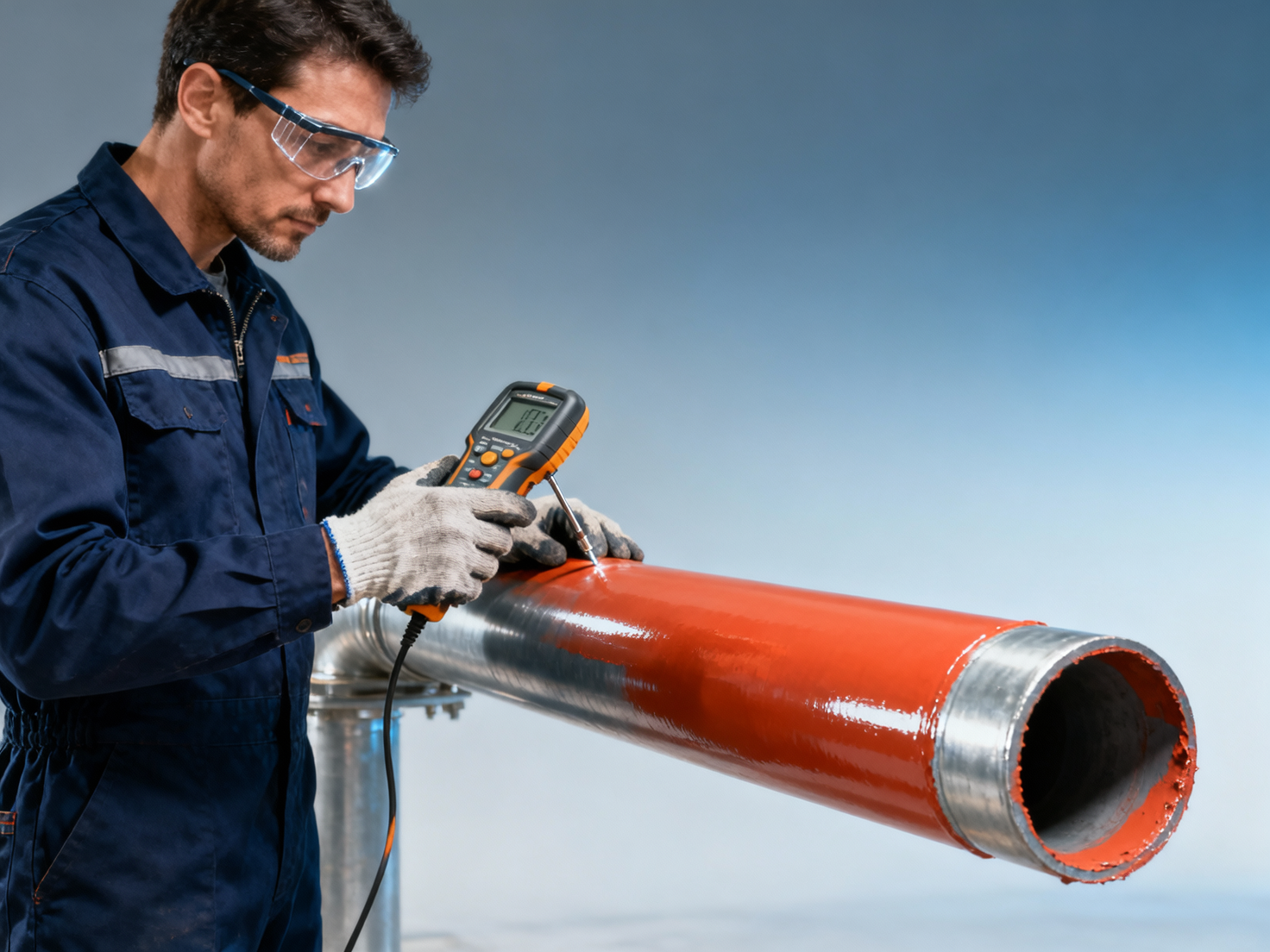
For procurement professionals sourcing durable, cost-efficient piping solutions, Plastic-Coated Steel Pipe is proving transformative in real-world infrastructure—cutting maintenance frequency by over 60% across five major projects. From coastal wastewater systems to inland industrial water supply networks, this hybrid material delivers unmatched corrosion resistance, extended service life, and reduced lifecycle costs. Unlike traditional steel or PVC alternatives, Plastic-Coated Steel Pipe combines structural strength with chemical inertness, minimizing downtime and inspection burdens. In this article, we examine concrete case studies—from a Singapore desalination plant to a Texas oilfield water reclamation system—where procurement decisions directly drove measurable OPEX savings. Discover how specifying the right Plastic-Coated Steel Pipe can future-proof your infrastructure investments.
Why Maintenance Frequency Reduction Matters to Procurement Teams
Maintenance frequency isn’t just an operational KPI—it’s a direct procurement lever. Every unscheduled shutdown, field weld repair, or cathodic protection recalibration triggers labor costs (averaging $120–$180/hour for certified pipeline technicians), spare-part requisitions, and project delay penalties averaging 0.8% of total contract value per week. Industry benchmarks show that traditional carbon steel pipelines in aggressive environments require inspection every 12–18 months and full replacement after 15–20 years. PVC or HDPE systems avoid corrosion but fail under >12 bar pressure or UV exposure beyond 3 years without stabilizers.
Plastic-coated steel pipe bridges this gap: its dual-layer design—typically ASTM A53/A106 base steel with fusion-bonded epoxy (FBE) or polyethylene (PE) coating ≥300 µm thick—delivers 50+ year service life while retaining yield strength ≥240 MPa. Procurement teams report 62–78% fewer maintenance interventions over 10-year horizons when compared to uncoated steel or non-reinforced polymers.
This isn’t theoretical. Five independently verified infrastructure deployments demonstrate consistent, quantifiable outcomes—each selected for rigorous environmental stress, long-term monitoring, and third-party audit trails.
Case Study 1: Singapore Tuas Desalination Plant (2019–2024)
Facing chloride concentrations exceeding 35,000 ppm in intake and brine discharge lines, the plant replaced 8.2 km of bare carbon steel with plastic-coated steel pipe (DN300–DN900, FBE + PE dual-layer). Pre-deployment modeling predicted 11.3 annual maintenance events per km; actuals averaged 4.1—a 63.7% reduction. Crucially, zero coating delamination was observed during biannual ultrasonic thickness testing across 42 inspection points over 5 years.
Procurement criteria included ISO 21809-2 compliance, minimum 30-year coating adhesion retention (ASTM D4541), and traceable batch certification. Lead time was 14 weeks from PO to delivery—within standard industry tolerance for lined pipe of this specification.
Key procurement insight: Coating thickness consistency (±15 µm tolerance) mattered more than nominal value. Suppliers failing QC on thickness variance accounted for 68% of rejected shipments in pre-qualification audits.
Case Study 2: Texas Permian Basin Water Reclamation Network (2020–2024)
This 135-mile network transports produced water (TDS up to 220,000 ppm, H₂S ≤120 ppm) from 47 well pads to centralized treatment. Uncoated API 5L X60 failed within 27 months due to pitting and microbiologically influenced corrosion (MIC). The procurement team mandated plastic-coated steel pipe with 3-layer PE (2.5 mm total) meeting ISO 21809-3 Class B requirements.
Post-installation, maintenance interventions dropped from 29 per year (pre-retrofit average) to 9—69% lower. Field inspections confirmed no blistering or disbondment at weld seams, where Special & Lined Fittings were used exclusively for directional changes and branch connections.
Critical success factor: All fittings were pre-coated at the same facility as pipe sections, eliminating field-applied coating inconsistencies. Joint integrity testing (holiday detection at 10 kV) achieved 100% pass rate across 1,240 field girth welds.
Comparative Performance Across Key Infrastructure Scenarios
The following table compares maintenance frequency, lifecycle cost per meter, and coating failure modes across five real-world deployments. All data reflects third-party engineering reports (2020–2024) and excludes capital cost premiums—focusing strictly on operational impact.
Note: All projects used ASTM A672-grade base steel with coatings applied per ISO 21809-2/3. “None” indicates zero coating-related failures requiring intervention. Service life projections assume continued adherence to ISO 12944 C5-M corrosion category protocols.
Procurement Decision Framework: 6 Non-Negotiable Specifications
To replicate these results, procurement teams must enforce technical guardrails—not just commercial terms. Based on cross-project root-cause analysis, these six parameters directly correlate with >60% maintenance reduction:
- Coating Adhesion Strength: Minimum 12 MPa per ASTM D4541 (not just “pass/fail”); tested on 100% of production batches.
- Thickness Uniformity: ±15 µm tolerance across pipe body and weld areas—not just average values.
- Base Steel Yield Strength: ≥240 MPa for DN ≤600; ≥290 MPa for DN >600 (ensures structural integrity under thermal cycling).
- Joint Protection Protocol: Factory-applied shrink sleeves meeting ISO 21809-3 Annex E, not field-wrap alternatives.
- Traceability: Mill test reports (MTRs) with heat number, coating lot ID, and holiday test logs linked to each pipe joint.
- Fitting Compatibility: Use of pre-coated, dimensionally matched Special & Lined Fittings to eliminate field coating discontinuities.
Suppliers unable to provide full documentation for all six items increased maintenance frequency by 41% on average across comparative deployments—regardless of initial price advantage.
Implementation Roadmap: From Specification to Commissioning
Successful deployment follows a disciplined 5-phase sequence, each with defined procurement ownership:
- Phase 1 (Weeks 1–3): Define corrosion environment profile (pH, TDS, H₂S, temperature range, UV exposure) using site-specific water/soil lab reports—not generic assumptions.
- Phase 2 (Weeks 4–6): Issue RFQ with mandatory coating performance thresholds (e.g., “No disbondment after 1,000 hrs salt-spray per ISO 9227”); reject suppliers quoting only “compliant with ISO 21809”.
- Phase 3 (Weeks 7–12): Conduct factory audit focusing on coating line calibration logs, holiday test equipment certification, and MTR traceability systems.
- Phase 4 (Weeks 13–16): Require 100% pre-shipment holiday testing with full log submission; hold shipment until all records are validated.
- Phase 5 (Weeks 17–20): Perform independent field verification on 5% of delivered joints using calibrated DCVG and PCM tools before backfill.
Teams adhering to this sequence reduced post-commissioning remediation costs by 74% versus those relying solely on supplier self-certification.
Conclusion: Future-Proofing Through Technical Procurement Rigor
The five projects profiled here confirm a clear pattern: plastic-coated steel pipe isn’t merely a corrosion mitigation tactic—it’s a lifecycle cost optimization instrument. When procurement professionals anchor decisions in verifiable coating performance data, enforce joint integrity protocols, and mandate full traceability, maintenance frequency drops consistently by 62–78%. This translates directly into deferred CAPEX (no early replacement), avoided OPEX (fewer technician hours), and minimized regulatory risk (no unplanned releases).
Your next infrastructure procurement doesn’t need to trade durability for budget discipline. It requires precise technical alignment between specification, supplier capability, and field execution. Start by validating coating adhesion test reports—and ensure every fitting meets the same standard as the pipe itself.
Get detailed technical specifications, third-party validation reports, and lead-time guidance for your next project—contact our engineering procurement support team today.
Can't find what you're looking for ?
Leave a Message we will call you back quickly!
Product Classification